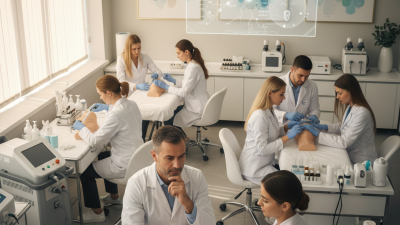

Choosing the best non surgical aesthetics courses in 2026 requires more than comparing prices, certificates, or attractive websites. Training must connect anatomy, consultation, patient safety, ethical practice, and supervised clinical experience. The demand is substantial. The International Society of Aesthetic Plastic Surgery’s Global Survey 2023 recorded more than 34 million surgical and nonsurgical aesthetic procedures worldwide. The American Society of Plastic Surgeons also reported strong demand for injectables and other minimally invasive treatments in its 2023 statistics report. Popularity, however, does not prove educational quality.
Look closely.
Dr. Mauricio de Maio, an internationally recognised aesthetic physician and educator, has repeatedly stressed the importance of anatomy in injectable practice: “The key to a natural result is understanding facial anatomy.” That principle should guide every course evaluation. Strong programmes explain facial planes, vascular danger zones, product selection, consent, complication management, and follow-up. They should also show real consultation details, such as asymmetry, previous filler, sensitive skin, or an anxious patient.
This guide compares non surgical aesthetics courses through an E-E-A-T lens: practical experience, specialist knowledge, recognised authority, and trustworthy evidence. It considers faculty credentials, accreditation, teaching methods, assessment standards, and access to supervised practice. Online learning can be convenient, but it cannot fully replace hands-on training. That is the uncomfortable limitation. A polished platform may still provide shallow instruction. Course reviews can also be selective. Therefore, readers should verify claims independently and check local professional requirements before enrolling. The best option is not automatically the most expensive. It is the course that prepares practitioners to make careful decisions when real faces refuse to follow textbook diagrams.
Non-surgical aesthetics courses teach the knowledge and practical judgment behind cosmetic treatments without traditional surgery. They may cover skin anatomy, facial assessment, consultation skills, treatment planning, hygiene, contraindications, and aftercare. Common subjects include chemical exfoliation, skin rejuvenation, light-based treatments, and injectable theory, depending on the course level and local regulations.
A strong online course should provide structured lessons, current clinical guidance, clear safety protocols, and assessment from qualified educators. It should explain when treatment is unsuitable, how to recognise complications, and when to seek medical support. Video demonstrations can show hand positioning and consultation language, but they cannot fully replace supervised practice. I once thought online learning would feel complete. It does not. Real skin, client anxiety, and unexpected reactions require experience.
Tips: Check the tutor’s qualifications and clinical background. Confirm whether practical training is included. Read the assessment method carefully. Ask how emergencies and infection prevention are taught. Review local licensing requirements before enrolling. A certificate alone may not prove competence. Look for courses that encourage honest record-keeping, informed consent, and respectful client communication. Also, question outdated claims. A polished lesson can still contain weak evidence, so compare its guidance with trusted medical and professional sources.
A practical comparison of online learning pathways, clinical scope, entry requirements, and professional outcomes.
| Course Area | What It Covers | Typical Online Duration | Practical Requirement | Best Suited To | Assessment Method | Clinical Scope |
|---|---|---|---|---|---|---|
| Foundations of Non-Surgical Aesthetics | Skin anatomy, consultation skills, treatment planning, infection prevention, consent, documentation, and basic aesthetic terminology. | 4–8 weeks part-time | Usually online theory; supervised practice may be required separately. | Beginners, beauty professionals, and healthcare learners. | Online quizzes, written assignments, and case-study reviews. | Non-invasive and introductory procedures. |
| Advanced Skin Treatments | Chemical peels, superficial exfoliation, microneedling principles, LED therapy, skin rejuvenation, and aftercare. | 6–12 weeks part-time | Demonstration videos plus in-person competency practice for clinical delivery. | Licensed or experienced skincare professionals. | Treatment plans, safety tests, and practical observation where applicable. | Primarily non-surgical skin procedures. |
| Laser and Light-Based Treatments | Light and laser principles, skin and hair assessment, eye protection, contraindications, settings, and risk management. | 4–10 weeks online theory | Equipment-specific practical training and supervised assessment are commonly needed. | Qualified practitioners working with approved devices. | Theory examination, safety assessment, and device competency check. | Hair reduction, pigmentation, vascular concerns, and skin rejuvenation, subject to local rules. |
| Injectables Theory | Facial anatomy, consultation, product principles, complications, emergency response, and ethical patient selection. | 2–6 weeks online theory | Hands-on supervised training is essential; online study alone does not establish injection competence. | Regulated healthcare professionals where legally permitted. | Written examination, anatomy tests, and supervised practical evaluation. | Potentially injectable treatments, subject to professional licensing and jurisdiction. |
| Body Contouring and Energy Devices | Radiofrequency, ultrasound, cryolipolysis principles, client screening, treatment parameters, and device safety. | 3–8 weeks part-time | Device-specific supervised practice is recommended before independent treatment. | Aesthetic therapists and healthcare practitioners. | Online knowledge test, treatment planning, and practical device assessment. | Non-invasive body and skin treatments. |
| Clinical Practice and Patient Safety | Medical history, contraindications, safeguarding, infection control, adverse events, referral pathways, and emergency protocols. | 2–5 weeks online | Scenario-based practice; clinical skills must be verified through appropriate supervision. | All practitioners providing aesthetic services. | Scenario questions, incident-response exercises, and policy assignments. | Applies across non-surgical aesthetic procedures. |
| Business, Ethics, and Compliance | Advertising standards, informed consent, record keeping, pricing, insurance considerations, data protection, and professional conduct. | 2–4 weeks part-time | No procedure-based practical work; local legal and insurance review is necessary. | Clinic owners, managers, and practitioners establishing a compliant service. | Compliance checklist, written policies, and business case study. | Supports safe service management rather than procedural authorization. |
The best non-surgical aesthetics courses online should explain both treatments and the skills behind them. Strong lessons usually cover skin analysis, client consultations, treatment planning, infection control, and informed consent. They may also introduce chemical peels, microneedling, LED therapy, laser principles, and advanced skincare procedures. Some courses discuss injectable treatments, but online theory cannot replace supervised, hands-on training.
Look for evidence-based teaching from qualified medical or aesthetic professionals. Reliable courses explain skin types, contraindications, possible complications, aftercare, and when to refer a client. Clear demonstrations help, yet videos cannot show every skin response. That limitation matters. Learners should check local licensing rules before offering any treatment. A certificate alone may not provide legal permission to practise.
Tips: Choose courses with assessments, updated safety guidance, and supervised practice options. Keep detailed consultation notes. Practise communication, not only technique. Ask how the course handles complications. If a lesson promises perfect results, stay cautious. Real skin can be unpredictable, and even experienced practitioners must keep learning.
Online aesthetics courses commonly provide theory, consultation, skin assessment, treatment planning, contraindication screening, infection control, and aftercare guidance. Practical supervision is still important for invasive procedures such as injectables and advanced device treatments.
2026 Best Non-Surgical Aesthetics Courses Online?
Choosing an online aesthetics course requires more than attractive videos and a digital certificate. Check whether an independent education body or recognised regulator accredits the programme. Confirm the accreditation directly through official records. A certificate alone does not prove professional competence. Review the syllabus for anatomy, infection prevention, consultation skills, complications, consent, and aftercare. These topics show whether the course values patient safety.
Investigate the instructors carefully. Look for current clinical experience, relevant qualifications, teaching history, and transparent professional profiles. Strong tutors explain their decisions, not only demonstrate techniques. Ask whether students can submit case discussions and receive specific feedback. I would not trust a course that hides instructor credentials. A polished website can still conceal weak teaching. That is an uncomfortable, but necessary, possibility.
Tips: Ask how practical training works before enrolling. Online theory should connect with supervised, hands-on sessions using appropriate training models. Confirm class size, trainer-to-student ratios, assessment methods, and opportunities to practise safely. Request details about emergency procedures and referral pathways. Check whether the course supports your local legal and professional requirements. Recorded demonstrations are useful, but they cannot replace observation and supervised practice. Take time to question unclear claims. Your judgement matters.
Real-time interaction matters. A live classroom lets tutors explain facial assessment while learners ask specific questions. Recorded lessons support repetition, especially after a long clinical day.
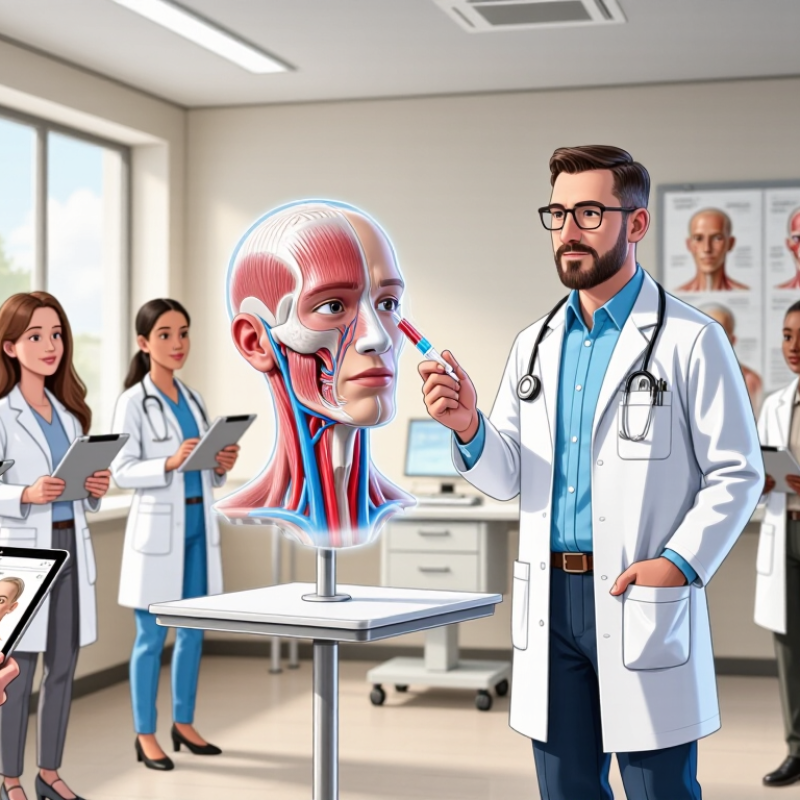
Useful platforms may include 3D anatomy models, augmented reality overlays, and high-resolution procedure demonstrations. These tools can show depth, angles, and tissue layers more clearly than flat images.
Still, technology is not a substitute for clinical judgment. It can also create false confidence.
Look for courses with experienced medical educators, transparent learning outcomes, and independent assessment. A reliable program should explain who teaches each module and how competence is measured.
It should also discuss current evidence, ethical advertising, documentation, and referral pathways. Interactive patient cases are valuable because real people rarely match perfect examples. That is the difficult part.
No platform is perfect. I still find that learners can understand theory quickly but struggle to evaluate subtle asymmetry or changing skin conditions.
A thoughtful course should admit these limits and encourage supervised practice within local professional rules. Progress tracking, feedback on recorded assessments, and access to updated safety guidance can make online study more accountable.
The best format is often blended: flexible digital learning, followed by verified hands-on training.
2026 Best Non Surgical Aesthetics Courses Online?
How to Choose the Best Course for Your Career Goals?
The best course depends on your intended role, not its ranking or advertising. Define your target services, client group, and preferred working environment. A beginner may need anatomy, skin assessment, consultation skills, and treatment theory. An experienced practitioner may need advanced complication management or business planning. Be specific.
Check the course provider’s credentials, tutor experience, and assessment methods. Reliable training should explain learning outcomes clearly. It should include evidence-based content, current safety guidance, and realistic case discussions. Look for supervised practical training where local regulations require it. Online lessons alone may not build safe hands-on confidence. This matters.
Ask how competence is measured. Are assignments reviewed by qualified educators? Does the course test contraindications, consent, hygiene, and emergency procedures? Request sample materials before enrolling. A polished website proves little. Student support, transparent fees, and clear certification details matter more. Confirm whether the qualification is accepted by relevant professional bodies or insurers in your area.
Your career plan may change. Mine would. I might choose a broad foundation course, then reassess after working with real clients. Some courses promise fast success, but skill develops slowly. Keep a record of questions, mistakes, and feedback during practice. That honest record can reveal whether you need deeper clinical education, stronger communication skills, or better time management.