
Choosing a reliable NAD+ Powder supplier is less about finding the lowest price and more about verifying what arrives in the drum. Dr. Charles Brenner, a leading NAD+ researcher, has emphasized NAD+’s essential role in cellular metabolism. That scientific context makes careful sourcing worthwhile, but it does not prove that any particular powder is pure or effective. Buyers need product-specific evidence.
Ask for a recent certificate of analysis tied to the lot you plan to purchase. Check whether it identifies the test methods, measured purity, and laboratory responsible for the results. A polished PDF is not enough. Look for matching lot numbers on the report, label, and shipping documents. Request details about manufacturing controls, storage conditions, packaging, and how the supplier handles complaints or failed tests. If answers arrive slowly or avoid specifics, take note.
Small details matter. A sealed sample jar should have a legible lot code; the supplier should explain how the material was protected from moisture and heat. Independent testing can add confidence, though one test cannot establish every quality attribute. Nor does a high assay number tell the whole story. I would still ask what the report leaves out.
This outline will examine supplier credentials, analytical documentation, traceability, and communication. It will also consider practical warning signs and questions to ask before placing an order. The aim is not to promise perfect certainty. It is to make the decision more evidence-based.
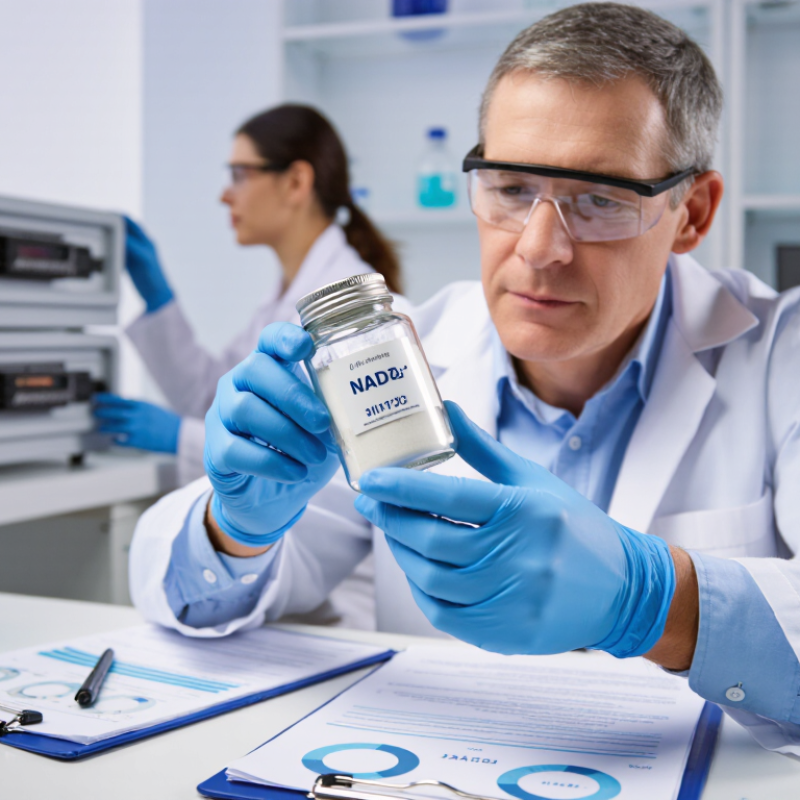
Before contacting suppliers, define the NAD+ powder you need in measurable terms. Specify its chemical form, target assay range, particle size, moisture limit, and intended formulation. If color, solubility, or flow through filling equipment matters, include those details too. They can affect whether a powder works in your process. Set acceptable ranges rather than relying on vague terms such as “high purity.” Small details matter. Without them, supplier quotes may describe products that are difficult to compare.
Then set evidence-based supplier criteria. Request a batch-specific certificate of analysis showing identity, assay, and relevant impurity results, along with the test methods used. Check that the report matches the lot offered, and ask whether testing was performed by an independent laboratory with suitable accreditation.
Review packaging, storage guidance, shelf-life data, traceability, minimum order quantity, and lead time. A polished document alone is not proof. Ask how the supplier handles out-of-specification results and whether samples are available for evaluation.
A checklist can still miss practical needs, so compare documents against your actual handling and testing process before approving a source.
Reliable NAD+ powder sourcing begins with confirming what is in the container, not just reading its label. Ask for a lot-specific certificate of analysis (CoA) that matches the lot number on the packaging. The report should identify the material and state the analytical methods used, such as NMR or a suitable chromatographic method. A generic sample report is not enough.
Review purity results alongside the method and acceptance criteria; a percentage alone says little. Check relevant records for moisture, residual solvents, elemental impurities, and microbiological quality based on intended use. Look for dated results, clear units, and an identifiable testing laboratory. Independent testing can add confidence, though it does not replace traceable records or careful handling. I still double-check lot numbers; small paperwork errors happen.
Tips: Request the current CoA, verify its lot number, and ask how samples are stored and shipped. Compare the report with the product specification. If answers are vague, pause and ask for clarification. A neat document can still omit important details.
| Evaluation Dimension | What to Verify | Credible Evidence | Warning Signs | Buyer Action |
|---|---|---|---|---|
| Product identity | Confirm the material is oxidized nicotinamide adenine dinucleotide (NAD+), not NADH or another related compound. Check the stated chemical name, form, and CAS number against the specification. | A lot-specific certificate of analysis (COA), a defined identity test, and supporting chromatographic or spectrometric data where available. | The paperwork says only “NAD,” omits the chemical form, or provides no method or result for identity. | Ask the supplier to clarify NAD+ versus NADH and provide the identity method and actual lot result before ordering. |
| Assay and purity | Check how assay is reported, including the calculation basis and whether the result is on an as-is or dry basis. Review related-substance or impurity information separately from assay. | A specification with defined limits and a batch-specific COA showing numerical results, units, and test methods. | A purity percentage is shown without a method, basis, specification, or lot-specific result. | Compare the results with your intended use and your own acceptance criteria; do not rely on a headline purity claim alone. |
| Analytical methods | Determine whether the methods are appropriate for the analyte and are validated or verified for the supplier’s material and intended measurement. | Named methods and method references; relevant chromatograms or reports may help substantiate identity, assay, and impurity results. | “Lab tested” is the only method description, or the supplier cannot explain how a reported result was obtained. | Request method details and, for important specifications, review the underlying analytical report with a qualified reviewer. |
| Independent testing | Check whether testing was performed by an independent laboratory and whether the laboratory’s accreditation covers the relevant test. | A test report identifying the laboratory, sample or lot, methods, results, and report date; verify accreditation scope when claimed. | An accreditation logo is presented without a verifiable scope, or a report cannot be linked to the supplied lot. | Verify the laboratory and applicable accreditation scope directly; treat accreditation as evidence of competence, not a guarantee of product quality. |
| Contaminant testing | Review risk-based results for relevant contaminants, such as elemental impurities, residual solvents, and microbiological quality, according to intended use and applicable requirements. | Defined specifications and lot-specific results with units, methods, and detection or quantitation limits where relevant. | Only a general “passes” statement is supplied, or testing categories do not match the product’s manufacturing risks or intended use. | Set acceptance criteria for your application and request the relevant results rather than assuming every test is required for every use. |
| Lot traceability | Ensure the COA, packaging, and purchase documents identify the same batch or lot and that the lot can be traced through the supply chain. | Matching lot numbers, manufacturing or release dates, and traceable supplier documentation. | A generic COA is reused for multiple batches or the lot number on the document differs from the product label. | Match the COA to the exact lot received and retain the records with purchasing and quality documentation. |
| Specifications and change control | Review the written specification, storage conditions, retest or expiry dating basis, and notification process for changes to material or manufacturing. | Controlled specification and documented procedures for revisions, complaints, and significant process or source changes. | Storage guidance or dating is missing, or specifications change without notice or version control. | Agree on current specifications and change-notification expectations before qualification and maintain the approved version. |
| Manufacturing quality system | Assess whether the manufacturing and quality controls are appropriate for the product and intended application. Verify any claimed certification directly. | Current, verifiable quality-system certificates or audit information with a clearly stated site, scope, and validity period. | Broad claims such as “GMP certified” are unsupported, expired, or do not cover the relevant site or activity. | Confirm the certificate issuer, site, scope, and validity; determine whether additional qualification or an audit is appropriate. |
| Handling and packaging | Check whether packaging and storage instructions address the material’s stated stability needs and protect it from unsuitable handling conditions. | Defined container, closure, storage, and shipping instructions, supported by stability information when relevant. | Packaging integrity is unclear, or no storage guidance is provided for the supplied material. | Follow the supplier’s documented conditions and assess packaging suitability for your storage and handling process. |
| Overall qualification decision | Evaluate the complete evidence set rather than relying on price, marketing claims, or a single test result. | Qualified evidence: consistent specifications, lot-linked results, traceability, and responsive technical support. | Unverifiable documents, inconsistent records, or refusal to answer basic quality questions. | Document the review, resolve gaps before purchase, and periodically requalify the supplier based on risk and performance. |
A reliable NAD+ powder supplier should show how quality is built into each production step. Request the facility’s current GMP documentation, audit records, and a clear explanation of which regulatory requirements apply to your intended market and product use. ICH Q7 provides GMP guidance for active pharmaceutical ingredients, but a certificate alone cannot prove that every batch meets specification. Ask for a lot-matched certificate of analysis, with identity, assay, impurity, residual-solvent, microbial, and heavy-metal results. Check that the testing methods and laboratory qualifications are documented.
The WHO’s 2017 global surveillance report estimated that about 1 in 10 medical products in low- and middle-income countries is substandard or falsified. This figure does not measure NAD+ powders specifically, but it shows why traceability and independent checks matter.
Look for batch numbers linked to raw-material records, retained samples, stability data, and a change-control process. A neat certificate is useful; it is not the whole story. If a supplier cannot explain an out-of-specification result or how it investigates deviations, pause and ask more questions.
Tip: Request a recent sample report from the exact lot you may purchase. Confirm the lab, test date, methods, and specifications, then compare them with your own quality requirements. Keep the conversation practical: ask who handles complaints, how recalls are managed, and how quickly records can be provided. One awkward detail may be worth revisiting.
A reliable NAD+ powder supplier should be able to explain its experience with ingredient handling, quality checks, and batch release. Ask how long the team has supplied similar materials and what happens when a batch fails inspection. Details matter. A confident sales answer is useful, but written procedures and dated records are more persuasive. If answers stay vague, pause before placing a large order.
Traceability should connect the powder in your sample to the material you receive. Request lot-specific documentation showing product identity, test methods, and relevant purity and contaminant results. Check that the lot number matches across the certificate, label, and shipping papers. Ask whether testing is performed in-house or by an independent laboratory, and review the report’s scope. A polished certificate is reassuring, but it is not proof by itself. I would want to verify the details rather than assume every document tells the full story.
Delivery terms deserve the same scrutiny as quality records. Confirm lead times, minimum order quantities, packaging, and the supplier’s recommended storage conditions. Powder can be affected by moisture, so ask how sealed containers are protected during transit. Clarify who handles delays, damaged packages, and documentation corrections. Keep those terms in writing. A low quote may look attractive, yet unclear shipping responsibilities can create avoidable costs and weeks of uncertainty. I have seen plans become messy over one missing lot reference.
How to Choose a Reliable NAD+ Powder Supplier
Compare Suppliers and Confirm a Reliable Partnership
A supplier comparison should go beyond price and polished certificates. Ask for a batch-specific certificate of analysis, with test methods and results for identity, assay, moisture, and relevant contaminants. Check whether an independent laboratory performed the tests and whether its accreditation covers the methods used. A PDF alone is not verification. Request a sample report and confirm that its lot number matches the material being offered.
ISO’s 2023 Survey recorded approximately 1.27 million ISO 9001 certificates worldwide. That scale makes certification useful context, not proof that a particular NAD+ batch meets its specifications. Ask what the supplier’s quality system actually controls: raw-material traceability, change notifications, deviations, and retained samples. Ask how complaints are investigated, too. The answers should be specific, dated, and consistent across documents.
Before committing, compare lead times, minimum order quantities, packaging, and storage guidance. Request written confirmation of how changes to manufacturing sites or test methods are communicated. A short technical call can reveal whether staff explain results clearly or dodge a basic question. No checklist catches everything. It is easy to trust tidy paperwork too quickly; leave room to verify claims with an independent review and a small qualification order.
