How to Choose the Best Facial Aesthetics Courses for Your Career Goals?
Choosing the right facial aesthetics courses is crucial for advancing your career in the beauty industry. With an array of options available, it can be overwhelming. Each course promises various skills and techniques, but not all are created equal. Identify your career goals. Do you want to specialize in injectables, laser treatments, or skincare? Knowing this can help narrow your options.
Facial aesthetics courses vary in quality and depth. Some focus heavily on theory, while others offer hands-on training. Consider how much practical experience you want. Look into the reputation of the institutions. Check reviews or speak to alumni about their experiences. Courses should also cover essential safety protocols and patient care.
It’s essential to reflect on your learning style. Some may thrive in a traditional classroom, while others prefer online options. Flexibility is important, but don't compromise on the standard of education. Remember, the investment in your skills can shape your future. Choose wisely, as the right course can open doors, while the wrong choice may lead to frustration and stagnation.

Understanding the Importance of Facial Aesthetics in Today's Market
Facial aesthetics have become increasingly significant in today's beauty market. More professionals are recognizing the value of enhancing facial features. This trend reflects growing consumer demand for aesthetic procedures. People seek natural-looking outcomes that boost confidence. Aesthetic treatments are not just for Hollywood stars anymore. They are for everyday individuals wanting to look their best.
Tips for Choosing Courses: Start by examining your career goals. What skills do you need? Basic training may not suffice if you aim for advanced techniques. Choose courses that align with where you want to be. Remember, not every course will suit your needs. Read reviews and consult others in the field before making a decision.
Many professionals think they are ready after one course, but the learning doesn’t end there. Facial aesthetics involve ongoing education. Techniques and trends change rapidly. Reflect on areas you might overlook, such as patient aftercare or understanding anatomy. Being well-rounded can set you apart in this competitive field. Be willing to adapt and grow continuously.
Facial Aesthetics Course Popularity in 2023
Evaluating Accreditation and Reputation of Aesthetics Courses
Choosing the right facial aesthetics course is crucial for your career. Accreditation plays a vital role in making this decision. Courses with recognized accreditation ensure that you receive quality education. According to a report from the American Association of Aesthetic Medicine, accredited courses significantly boost professional credibility. In fact, 78% of employers prefer candidates from accredited institutions.
Reputation is another key factor. Researching alumni success stories can provide insight into the course's effectiveness. A survey found that graduates from reputable programs earn 25% more in their first year than those from lesser-known schools. However, it’s essential to reflect on your goals. Some prestigious courses may not align with your specific interests.
Consider online reviews and feedback from current students. Many courses may showcase impressive marketing materials, but reality can differ. Pay attention to any red flags. Sometimes, the fit may not be right even in highly rated programs. Choose wisely. Your career in aesthetics depends on this foundational choice.
Identifying Course Content: Techniques and Technologies Covered
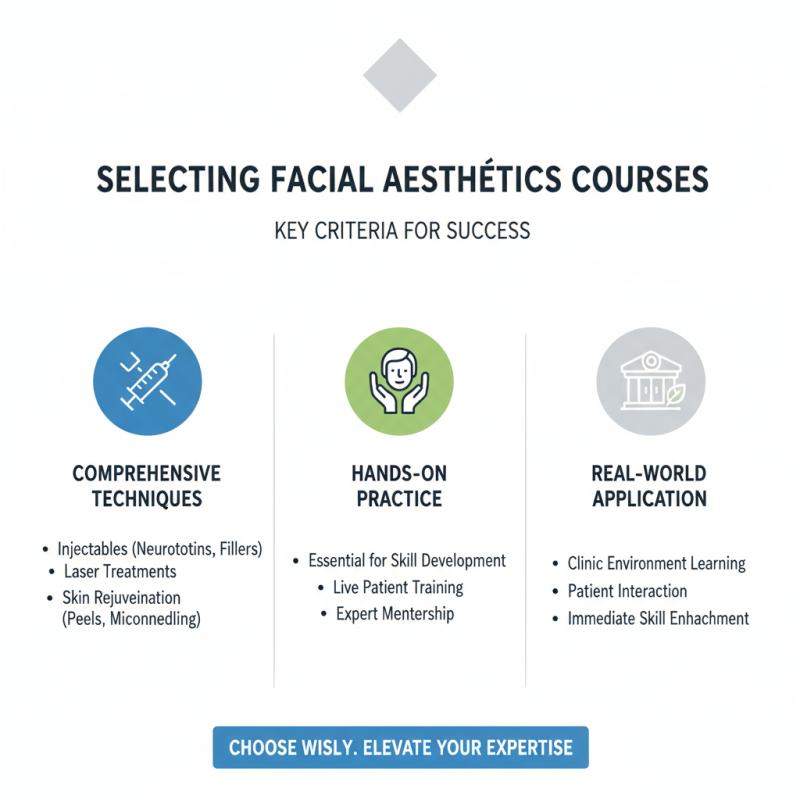
When selecting facial aesthetics courses, understanding the course content is vital. Look for programs that cover a variety of techniques. The focus should include injectables, laser treatments, and skin rejuvenation methods. Hands-on practice is essential. Learning in a real environment can enhance your skills significantly.
Advanced courses may offer insights into the latest technologies. Familiarizing yourself with devices like ultrasound or radiofrequency will be beneficial. However, it’s crucial to consider if the technology is relevant to your target market. You might find that some technologies are not widely accepted. Therefore, research their effectiveness and popularity before committing to a course.
Reflect on your personal learning style. Some individuals thrive in a structured classroom, while others prefer online modules. Ensure the course fits your needs. Don't underestimate the importance of networking opportunities available through these courses. Building connections with instructors and peers can provide future job leads or collaborations. Take time to evaluate what specific techniques will align with your long-term career goals.
Assessing the Qualifications of Instructors in Facial Aesthetics Training
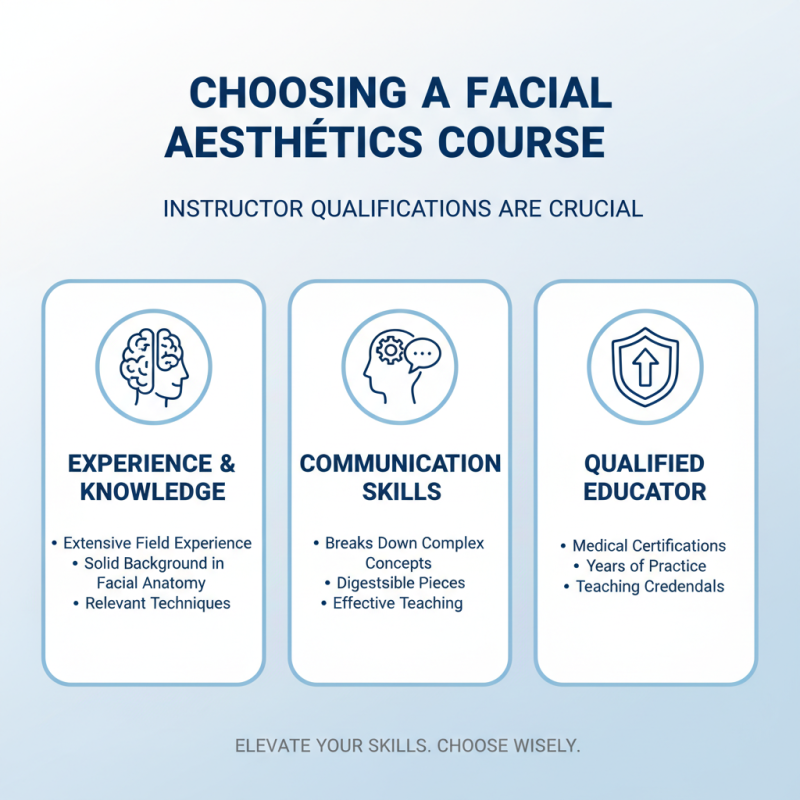
When selecting a facial aesthetics course, evaluating instructor qualifications is crucial. Look for instructors with extensive experience in the field. They should have a solid background in facial anatomy and relevant techniques. Knowledge is key, but so is the ability to communicate effectively. A great teacher can break down complex concepts into digestible pieces.
Consider their credentials and certifications. Are they recognized in the industry? This can impact your learning experience. Seek feedback from previous students. Their experiences can highlight the instructor's strengths and weaknesses. A course may look appealing, but if the instructor lacks engaging teaching methods, it may not meet your needs.
Observe how instructors interact during demos. Are they patient and clear in their explanations? It’s important to see how they handle questions. This reflects their mastery and passion for the subject. Avoid programs that make you feel rushed or confused. Your education should empower you, not overwhelm you. Take the time to reflect on these factors before making a decision.
Analyzing Career Outcomes and Success Rates of Course Graduates
When considering facial aesthetics courses, examining career outcomes is crucial. A recent industry report showed that graduates from accredited programs see a 75% increase in job placement rates within the first six months. This statistic reflects the importance of choosing a course with a solid reputation and proven results.
Tips: Look for programs with strong mentorship opportunities. Having experienced practitioners guide you can enhance your learning. Networking is another key factor. Engaging with alumni can provide insights and potential job leads.
Additionally, the success rates of course graduates vary widely. Some courses claim high satisfaction rates, but deeper research often reveals discrepancies. It’s essential to verify testimonials and seek unbiased reviews. Consider the course content and the skills taught. Are they aligned with current market demands?
Tips: Attend open days or webinars. Interacting with instructors can help gauge their expertise. Also, explore the support services offered for job placement after graduation.