How to Choose Medical Aesthetic Laser Equipment in 2026
Choosing medical aesthetic laser equipment in 2026 is not a matter of buying the newest machine. It means matching wavelength, pulse duration, cooling, and treatment protocols to the patients a clinic actually sees. A platform that performs well for one indication may be a poor fit for another. Small details matter: handpiece weight, screen visibility, service response time, and the cost of replacement parts. The demo room can feel convincing. Daily workflow is the real test.
Demand is substantial, but it does not guarantee success for every device. The International Society of Aesthetic Plastic Surgery’s 2023 Global Survey reported approximately 19.1 million nonsurgical aesthetic procedures worldwide. That figure signals a large treatment landscape, not a promise of returns. Buyers should compare the intended indications, training requirements, consumable costs, maintenance terms, and published clinical evidence. They should also ask how the device performs across relevant skin types. A polished brochure is not clinical proof.
Laser science offers a useful anchor. In their foundational paper, dermatologist R. Rox Anderson and John Parrish described “selective photothermolysis: precise microsurgery by selective absorption of pulsed radiation.” Their principle reminds buyers to match the laser’s settings to its target. In practice, that means scrutinizing parameters, not just brand names. Still, a spreadsheet can mislead. Get hands-on demonstrations, request references from comparable clinics, and examine service commitments in writing. For a safer, more evidence-led approach to medical aesthetics and laser purchasing, this guide examines the questions worth asking before signing.
Define the Intended Treatments, Patient Profiles, and Clinical Setting
How to Choose Medical Aesthetic Laser Equipment in 2026
Define the treatments your clinic intends to provide before comparing equipment. Are you addressing vascular lesions, pigmentation, hair reduction, or skin texture? These goals can call for different wavelengths, pulse settings, spot sizes, and cooling methods. One device may not suit every treatment. Details matter.
Consider the patients you actually see. Note their range of skin tones, hair characteristics, treatment histories, and expectations. A careful consultation helps identify whether a proposed treatment is appropriate; equipment alone cannot make that decision. Staff need relevant training and clear protocols for screening, eye protection, and managing adverse reactions. Results vary. Avoid promises based only on a device’s advertised capabilities.
The clinical setting matters just as much. Check room dimensions, electrical requirements, ventilation, patient flow, maintenance access, and staff experience. A busy clinic may value efficient setup, while a smaller practice may need flexible treatment options and predictable service support. Ask for practical demonstrations, and assess how easily operators can adjust settings and document treatments. A spreadsheet can make this look simple. It isn’t. Real appointment schedules, patient needs, and staff confidence may expose gaps that a brochure will not.
How to Choose Medical Aesthetic Laser Equipment in 2026
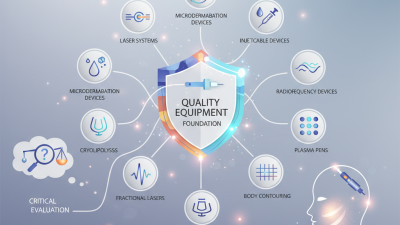
Start with the intended treatment, patient profiles, and clinical setting. Wavelength is one factor in device selection—not a substitute for assessing skin type, treatment parameters, operator training, or safety requirements.
The chart shows nominal wavelengths for common aesthetic laser types. Applications are broad examples: 532 nm KTP is commonly used for selected superficial vascular or pigmented lesions; 755 nm alexandrite and approximately 800–810 nm diode lasers are used for hair reduction; 1064 nm Nd:YAG is used for hair reduction and selected vascular treatments; and 2940 nm Er:YAG and 10,600 nm CO₂ lasers are used for skin resurfacing. Actual indications and suitability vary by device, patient, and treatment protocol.
Match Laser Wavelengths to Indications: 755, 1064, 2940, and 10,600 nm
For medical aesthetic laser equipment in 2026, match wavelength to the target—not just the device’s headline power. The American Society of Plastic Surgeons’ 2023 procedural statistics recorded roughly 3.7 million laser skin-resurfacing procedures. That figure signals demand, but it does not tell a clinic which platform suits its patients.
At 755 nm, alexandrite systems target melanin and are commonly used for hair reduction and selected superficial pigmentation. Because epidermal melanin also absorbs energy, skin tone, tanning, cooling, and settings need careful consideration. Not interchangeable.
At 1064 nm, Nd:YAG energy penetrates more deeply and is used for hair reduction and selected vascular concerns; its lower melanin absorption can be useful for darker skin, with appropriate assessment and settings. The 2940 nm Er:YAG wavelength is strongly absorbed by water, enabling controlled, relatively superficial resurfacing. At 10,600 nm, CO2 energy also targets water, generally producing more thermal effect and potentially longer recovery.
A common planning mistake is treating wavelength as the whole decision. It isn’t. Pulse duration, spot size, fluence, cooling, operator training, and realistic downtime matter too. I still find “best wavelength” too tidy a phrase; indication and patient assessment should lead the purchase decision.
Compare Core Specifications: Pulse Duration, Spot Size, and Fluence
When choosing medical aesthetic laser equipment in 2026, compare pulse duration, spot size, and fluence as a working set. Pulse duration describes how long energy is delivered. It should suit the target and treatment goal, rather than simply being as short as possible. A setting that works for one lesion or skin type may not suit another. Specs can mislead.
Spot size affects how energy travels through tissue. Larger spots can reach deeper targets under suitable conditions, while smaller spots may help with precision around limited areas. Fluence, measured in joules per square centimetre, indicates energy delivered across the treatment area. Higher fluence is not automatically better; tissue response, cooling, skin assessment, and operator training matter.
Tips: Request the usable ranges, pulse options, and calibration details. Ask how settings are validated, and review the service and training records.
Compare these specifications using realistic treatment scenarios, not a single headline number. For example, consider a small, defined treatment area and a broader area, then check which spot sizes and pulse durations are available for each. Confirm that fluence adjustments are clear and repeatable. Also check whether the displayed values match measured output during routine servicing. A gap in a spec sheet deserves a question, not an assumption. When reviewing results, document settings and observed skin responses; protocols may need refinement, and that uncertainty is worth acknowledging.
Verify FDA 510(k) Status, IEC 60601 Compliance, and Laser Safety Controls
Before comparing treatment menus or handpiece counts, verify the exact device identity. In the United States, search the FDA 510(k) database using the manufacturer and model. Then compare the cleared indications with the clinic’s planned use. “FDA registered” does not mean the device has 510(k) clearance. Clearance applies to a specific device and intended use, not every treatment a seller may mention. Check the decision summary and labeling, and keep dated copies. Small mismatch, big concern.
For IEC 60601, ask which standard edition applies and whether the evidence names the exact model and configuration. A vague compliance claim is not enough. Request a traceable test report or conformity document. Confirm that the evaluation covers electrical safety and essential performance, including supplied accessories.
Inspect the laser controls during a demonstration. Ask staff to show the key switch, emission warning, emergency stop, and door interlock where fitted. Check that protective eyewear matches the laser wavelength and has documented optical density. Confirm service intervals and who checks room access and eyewear before each session. Paperwork can look tidy. That is not the same as safe. A checklist still leaves judgment calls, especially when treatment plans differ from cleared labeling; seek qualified clinical and regulatory review when details do not align.
Evaluate Training, Maintenance, and Total Cost of Ownership Before Purchase
Choosing medical aesthetic laser equipment in 2026 means looking beyond treatment settings and purchase price. A capable system still depends on people who can use it safely and consistently. Ask what initial training includes, who provides it, and whether staff can practice realistic scenarios. Short refresher sessions matter. Staff turnover is real.
Check whether training covers patient screening, eye protection, parameter selection, skin response, and emergency procedures. Request written materials and a clear route for clinical questions. Avoid relying on a single brief demonstration; confidence can fade when an unexpected response occurs. This part is easy to underestimate.
Maintenance changes the true cost. Get the service schedule, expected calibration intervals, response times, and replacement-part availability in writing. Ask how long a routine repair might take and what happens if a handpiece or cooling component fails. Then estimate total cost of ownership across several years: installation, training, service, consumables, utilities, financing, and appointments lost during downtime. Use your own appointment volume, not a sales forecast. Compare estimates under cautious and busy schedules. A spreadsheet will not capture every disruption, and your first assumptions may be wrong. Better to notice that before signing.