
Top Medical Cosmetics Manufacturers for Global Buyers?

Choosing the right medical cosmetics manufacturer requires more than comparing prices or browsing polished websites. Global buyers must examine product quality, regulatory readiness, manufacturing capacity, and communication standards. A credible partner should provide clear documentation, including ingredient specifications, batch records, stability data, safety assessments, and certificates relevant to the target market. These details reveal how seriously a manufacturer manages risk.

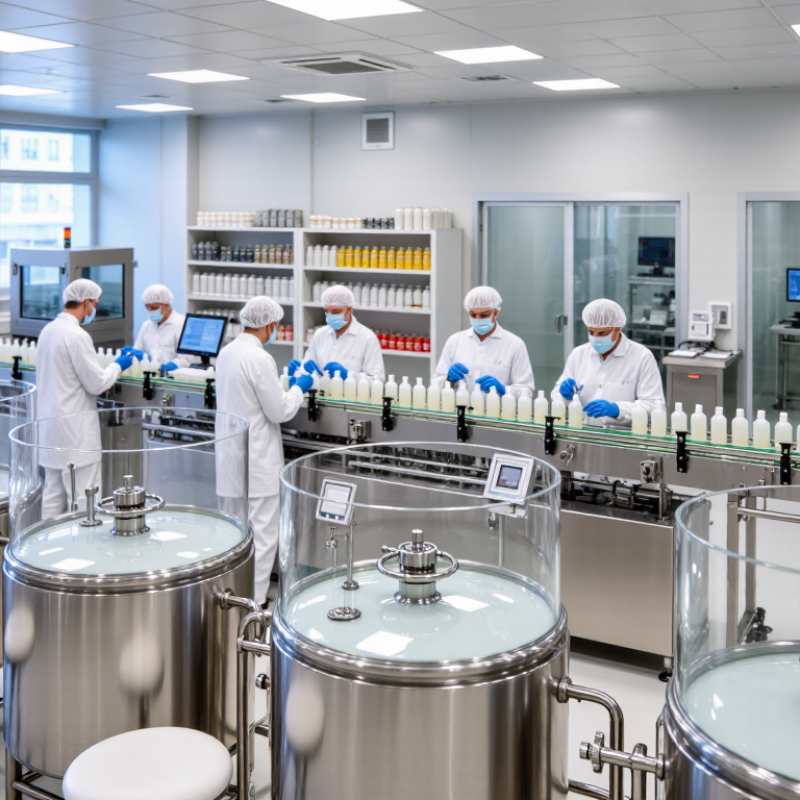
Manufacturing standards matter. Facilities operating under recognized quality systems, such as GMP or ISO frameworks, may offer stronger process control. However, certification alone is not enough. Buyers should review audit findings, testing procedures, complaint handling, and product traceability. A factory tour, whether physical or virtual, can expose practical details: clean filling lines, labeled storage zones, calibrated equipment, and controlled sample rooms.

The phrase medical cosmetics can describe different products across countries. Classification, permitted claims, labeling rules, and registration duties may vary significantly. Experienced manufacturers should explain these differences without promising effortless approval. That honesty matters.

A polished brochure proves little.

Strong suppliers support evidence-based claims. They also disclose minimum order quantities, lead times, packaging options, formulation ownership, and change-control procedures. Independent laboratory testing can add valuable reassurance, especially for sensitive skin products or sterile-looking packaging.

No supplier is perfect. Even experienced buyers can overlook communication delays or hidden customization costs. For this reason, a balanced shortlist should combine technical evidence, commercial transparency, and references from comparable markets. The following guide examines leading manufacturers through these practical criteria, helping global buyers make informed decisions while recognizing that local professional advice remains essential.
Top Medical Cosmetics Manufacturers for Global Buyers?

What Defines a Medical Cosmetics Manufacturer?

A medical cosmetics manufacturer is more than a factory producing attractive creams or devices. It combines cosmetic science, clinical evidence, controlled production, and responsible claims. Grand View Research estimated the global medical aesthetics market at about USD 20.48 billion in 2023. That growth increases pressure on manufacturers to prove quality, not merely promise results.

A credible manufacturer should show traceable raw materials, validated processes, stability testing, and documented complaint handling. ISO 22716 supports good manufacturing practices for cosmetics. ISO 13485 may apply when a product is regulated as a medical device. The exact requirement depends on its intended use, claims, ingredients, and target market. Strong manufacturers also maintain batch records, supplier audits, and recall procedures. A polished certificate wall is not enough. Buyers should inspect the evidence behind it.

Tips: Ask for recent audit reports, stability data, microbial test results, and sample batch records. Check whether marketing claims match the tested product. Visit the production site when possible. Observe clean zones, labeling controls, and operator training. No factory is flawless. What matters is transparent correction when a weakness appears. According to the European Commission’s cosmetics safety framework, products require a safety assessment before market placement. That detail is easy to overlook, yet it separates disciplined manufacturing from attractive packaging.

How to Classify Medical Cosmetics Manufacturers by Product and Expertise

Top Medical Cosmetics Manufacturers for Global Buyers?

How to Classify Medical Cosmetics Manufacturers by Product and Expertise

Medical cosmetics manufacturers differ by product function, production controls, and technical depth. Topical barrier creams require stable emulsions, skin compatibility testing, and protective packaging. Post-procedure products need careful ingredient selection and documented safety evidence. Some manufacturers also produce regulated devices, such as light-based equipment or sterile dressings. These products demand different facilities, validation methods, and quality systems.

A reliable buyer should examine expertise beyond a polished catalogue. Ask whether the manufacturer has qualified formulation scientists, trained quality teams, and documented batch traceability. Review stability data under realistic temperature and humidity conditions. Check how complaints, recalls, and deviations are recorded. Manufacturing experience matters here. Small process weaknesses can affect texture, sterility, or shelf life.

Production scope matters too. A facility serving professional clinics may understand controlled distribution and practitioner training. A high-volume consumer facility may excel at packaging and capacity. Neither is automatically better. The fit depends on the product and market. Look for audited quality systems, transparent technical files, and evidence-based claims. Be cautious when clinical language sounds stronger than the data. I would also question impressive certificates without recent audit records. This step is often overlooked, and my own supplier reviews have shown that paperwork can hide operational gaps. Ask for specifics, not promises.

Top Medical Cosmetics Manufacturers for Global Buyers? - How to Classify Medical Cosmetics Manufacturers by Product and Expertise

Manufacturer Classification Typical Product Formats Common Product Focus Relevant Manufacturing Expertise Quality and Compliance Considerations Suitable Global Buyer Profile
Dermatology Skincare Manufacturers Creams, lotions, gels, serums, cleansers and treatment masks Dryness, sensitive skin, acne-prone skin, uneven pigmentation and visible signs of ageing Emulsion stability, pH control, preservative systems, skin-compatibility testing and controlled filling ISO 22716 cosmetics GMP is widely used; claims and ingredients must comply with the destination market Distributors, dermatology clinics, pharmacies and private-label skincare companies
Professional Chemical Peel Manufacturers Single-use ampoules, peel solutions, pre-peel cleansers and post-treatment creams Controlled exfoliation using acids such as glycolic acid, lactic acid or salicylic acid Acid concentration control, pH measurement, compatibility testing and professional-use packaging Product classification varies by market; safety data, labeling, directions and professional-use restrictions are important Aesthetic clinics, medical spas, dermatology practices and professional distributors
Post-Procedure Skincare Manufacturers Barrier creams, soothing gels, repair balms, sprays and protective sunscreens Support for compromised skin barriers after aesthetic or dermatological procedures Low-irritation formulation, fragrance-free development, airless packaging and contamination control Avoidance of unsupported medical claims; microbiological quality and stability testing are essential Clinics, hospitals, recovery-care distributors and professional skincare retailers
Sun Protection Manufacturers Creams, lotions, fluid emulsions, sprays and stick products Broad-spectrum ultraviolet protection, water resistance and daily facial protection UV-filter dispersion, photostability, sensory optimization and resistant-film formulation SPF and broad-spectrum test methods differ by region; product claims require substantiation and compliant labeling Pharmacies, hospitals, dermatology channels, outdoor-care distributors and private-label buyers
Advanced Delivery-System Manufacturers Liposome serums, encapsulated creams, hydrogel products and micro-needle cosmetic patches Improved ingredient protection, controlled release or enhanced skin-surface delivery Particle-size control, encapsulation efficiency, release testing, scale-up and specialized filling Technology claims require evidence; the regulatory status of delivery systems can vary by intended use and market Innovation-led brands, clinical channels, specialty distributors and research-oriented buyers
Sensitive-Skin and Hypoallergenic Manufacturers Minimalist creams, cleansing fluids, barrier lotions and pediatric skincare products Fragrance-free, dye-free and low-irritation care for reactive or sensitive skin Ingredient screening, allergen management, gentle surfactant systems and repeat-insult patch testing “Hypoallergenic” and “sensitive skin” claims should be supported by appropriate testing and market-specific rules Pharmacies, maternity retailers, dermatology clinics and sensitive-skin product distributors
Aesthetic Device and Consumable Manufacturers Topical conductive gels, post-device masks, sterile dressings and procedure-support products Products used alongside laser, radiofrequency, ultrasound or microneedling procedures Device compatibility, sterile or low-bioburden production where required, single-use packaging and traceability Medical-device or drug requirements may apply depending on intended use, claims and jurisdiction Hospitals, aesthetic clinics, device distributors and professional treatment networks
Private-Label and Contract Manufacturing Specialists Complete skincare lines, customized formulas, bulk products and finished retail units Flexible product development for buyers requiring custom formulas, packaging or market positioning Research and development, pilot batches, scale-up, packaging procurement, filling and documentation support Buyers should verify audit records, batch documentation, stability data, minimum order quantities and export experience Importers, distributors, pharmacy groups, clinics and emerging skincare brands
Global Buyer Evaluation Dimensions: Product classification, intended use, formulation capability, quality-management system, stability and safety testing, regulatory documentation, packaging compatibility, minimum order quantity, lead time, batch traceability and export support.

Key Standards for Evaluating Global Medical Cosmetics Suppliers

Global buyers should evaluate medical cosmetics suppliers through documented standards, not attractive product claims. ISO’s 2023 Survey recorded more than 37,000 ISO 13485 certificates worldwide. Certification helps, but it does not guarantee every batch performs well. Buyers should verify certificate scope, site location, expiry date, and audited manufacturing processes.

ISO 22716 supports good manufacturing practices for cosmetic products. Ask for batch records, raw-material specifications, stability data, and contamination controls. For products contacting damaged or sensitive skin, request relevant safety testing and clear clinical evidence. Grand View Research estimated the global cosmeceuticals market at over 60 billion US dollars in 2023. Fast growth increases supplier choice, but also raises verification pressure.

Look beyond the sample.

A reliable supplier should explain complaint handling, recall procedures, change control, and product traceability. Check whether packaging protects formulas during long-distance shipping. Review evidence from independent laboratories, not only internal summaries. Regulatory files should match the target market’s product classification and claims. I would not treat a polished audit folder as proof of real consistency. On-site audits, retained samples, and small pilot orders reveal practical weaknesses. Some suppliers may meet formal standards yet communicate slowly or hide production changes. That gap deserves careful questioning before a global contract.

Leading Regions and Manufacturing Capabilities in the Industry

North America remains a major hub for medical cosmetics manufacturing, supported by strong clinical demand and established device engineering. Grand View Research estimated the global medical aesthetics market at over USD 18 billion in 2023, with continued double-digit growth expected through 2030. Manufacturers in the United States and Canada commonly provide energy-based devices, injection systems, sterile consumables, and digital treatment controls. Their capabilities often include clinical validation, automated assembly, and quality systems aligned with ISO 13485.

Europe contributes deep regulatory and engineering expertise. Germany, Italy, France, and the United Kingdom support production across dermatology devices, professional skincare equipment, and precision components. EU Medical Device Regulation has increased documentation requirements, including technical files, post-market surveillance, and traceability. This raises development costs. It also improves purchasing confidence when suppliers can show complete audit records, batch controls, and transparent testing methods.

East Asia has become highly competitive in electronics, molds, optical modules, and high-volume assembly. China, Japan, and South Korea offer flexible production lines, short tooling cycles, and increasingly capable research teams. The 2023 ISAPS Global Survey reported more than 34 million aesthetic procedures worldwide, indicating sustained demand for reliable equipment and consumables. Yet capacity alone is not enough. Some factories still emphasize speed over clinical evidence, creating avoidable risks. Global buyers should inspect validation reports, sterilization controls, operator training, and supplier continuity before comparing price. Feature lists look impressive. Manufacturing discipline matters more.

Leading Regions in Medical Cosmetics Manufacturing

Regional comparison based on 2023 international trade value for beauty, skin-care and related preparations under HS 3304. Europe leads through advanced formulation, private-label production, clinical testing and strong regulatory infrastructure, while East Asia is a major center for high-volume, innovative and OEM/ODM manufacturing.

Data source: UN Comtrade, HS 3304 “Beauty or make-up preparations and preparations for the care of the skin,” 2023. Values are rounded regional aggregations in USD billions and are used as a trade-based proxy for manufacturing scale; HS 3304 includes cosmetic products beyond strictly clinical or medical claims.

How Global Buyers Can Select the Right Manufacturing Partner

Global buyers need more than a polished factory website when selecting a medical cosmetics manufacturing partner. Grand View Research’s 2024 medical aesthetics report projects strong market growth through 2030, increasing pressure on suppliers and quality teams. Growth changes behavior. Buyers should verify whether the manufacturer handles cosmetics, medical devices, or both. Each category may require different evidence, testing, labeling, and post-market controls.

Request recent audit records, batch documentation, stability data, and product traceability samples. Check alignment with ISO 22716 for cosmetic good manufacturing practices and ISO 13485 when medical-device quality systems apply. FDA registration can support regulatory review, but it does not prove product approval or manufacturing excellence. Ask who releases each batch, how deviations are investigated, and how raw materials are qualified. Test the details.

McKinsey’s 2023 beauty industry analysis places global beauty revenues near 600 billion dollars by 2027, showing why capacity claims deserve careful review. A reliable partner should provide realistic lead times, validated production capacity, and clear change-control procedures. Visit the site when possible. Watch the filling line, environmental controls, operator training, and warehouse separation. A perfect audit file can still hide weak daily discipline. I would also compare pilot batches against agreed specifications, rather than trusting samples alone. No checklist is perfect. Supplier selection should remain evidence-based, documented, and revisited after production begins.