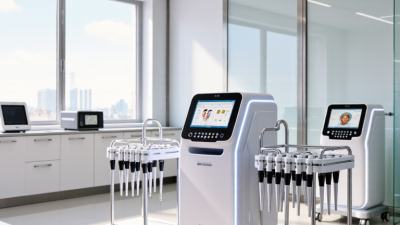

What Are the Top Medical Aesthetic Equipment in 2026?

In 2026, medical aesthetic equipment is becoming more precise, connected, and difficult to evaluate. New platforms combine energy delivery, imaging, cooling, and software in one treatment workflow. Yet impressive specifications do not guarantee better patient outcomes. Skin type, treatment goals, operator training, and aftercare still matter greatly.

Dr. Rox Anderson, a pioneer in laser medicine, famously said, “If you can heat it, you can treat it.” His statement captures the basic principle behind many aesthetic technologies. However, controlled heating requires accurate calibration, suitable patient selection, and careful monitoring. Too little energy may produce disappointing results. Too much may create burns, pigment changes, or prolonged inflammation.

This guide examines the top medical aesthetic equipment expected to influence clinics in 2026. It considers fractional lasers, radiofrequency systems, focused ultrasound devices, intense pulsed light platforms, and advanced body-contouring equipment. Each category offers different strengths. None is perfect.

Real clinic decisions involve more than purchase price. Providers must assess clinical evidence, device reliability, consumable costs, service support, and staff competence. Regulatory authorization should also be verified in the intended market. Marketing language can be persuasive, but measurable outcomes deserve greater attention.

Some newer systems may appear revolutionary. Their long-term value remains uncertain. That uncertainty is worth acknowledging. A responsible clinic should compare peer-reviewed evidence, manufacturer data, and real-world experience before investing. Patients also deserve honest explanations about benefits, limitations, recovery time, and possible risks. The most valuable equipment is not always the newest model. It is the system used safely, consistently, and for the right patient.
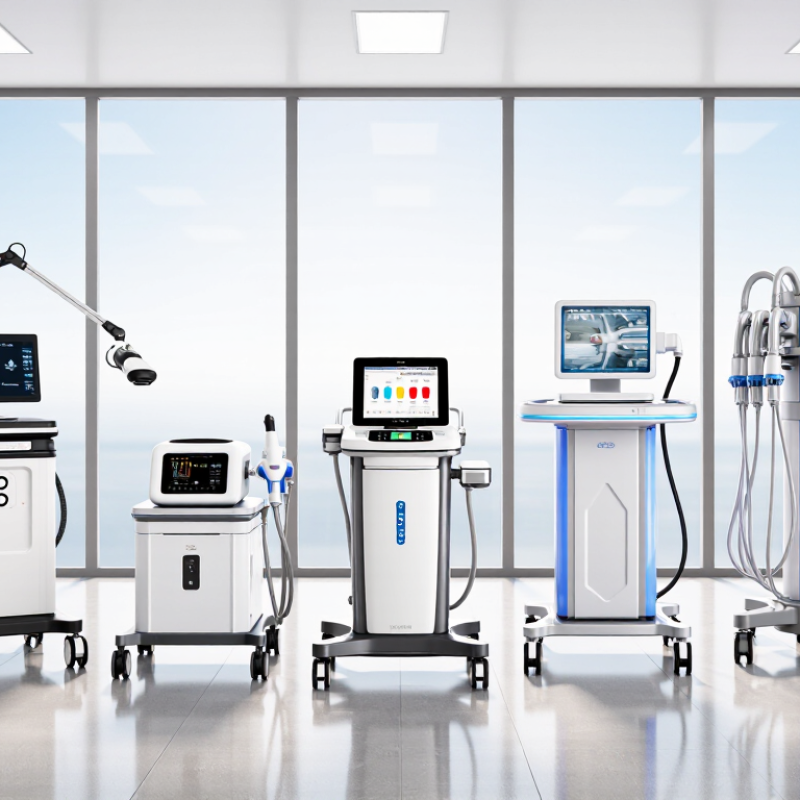
What Are the Top Medical Aesthetic Equipment in 2026?

2026 Scope: Define “Top” Using ISAPS’ 19.1M Nonsurgical Procedures

What makes medical aesthetic equipment “top” in 2026? Demand offers one useful clue, but it cannot define quality alone. The ISAPS Global Survey reported 19.1 million nonsurgical procedures worldwide in 2022. Botulinum toxin and hyaluronic acid led demand, while laser hair removal, photo rejuvenation, and nonsurgical body contouring also remained significant. These figures show patient interest, not automatic proof of clinical superiority.

For clinics, leading equipment should support predictable results, controlled energy delivery, and short recovery times. Common high-value categories include laser and light platforms, radiofrequency systems, focused ultrasound devices, and cooling technologies. Practical details matter. A clear treatment screen matters. So does reliable calibration. Operators should record skin type, settings, treatment response, and adverse events. The FDA’s safety guidance and ISO 14971 risk-management principles also support careful device selection and monitoring.

Still, the statistics have limits. ISAPS reports procedure volumes, not device-specific outcomes. Popularity can reflect advertising, access, or local habits. That is an important weakness. A device may look impressive in a sales demonstration yet perform poorly with inconsistent protocols. My clinical preference would be evidence before novelty, with peer-reviewed studies, transparent training, and realistic patient consent. The “top” system in 2026 may therefore be the one that delivers repeatable outcomes, protects different skin types, and fits a clinic’s actual workflow. Not the newest machine.

Core Technologies: Compare Lasers, IPL, RF, and Focused Ultrasound

Equipment selection in 2026 should begin with tissue physics, not advertising. ISAPS’s 2023 Global Survey recorded nearly 20 million nonsurgical aesthetic procedures worldwide. That volume reflects demand, but it does not prove equal clinical value. Clinical endpoints matter. Lasers deliver selective photothermolysis, making wavelength and pulse duration critical for pigment, vessels, or resurfacing. IPL uses broad-spectrum light and can treat diffuse redness or sun spots efficiently, yet it demands careful skin-tone assessment. Published evidence is less uniform across devices.

RF heats tissue through electrical resistance. Monopolar and bipolar systems differ in depth, impedance control, and comfort. Focused ultrasound concentrates acoustic energy beneath the surface, supporting controlled lifting or tightening without removing the epidermis. The ASDS 2023 Consumer Survey reported strong interest in minimally invasive treatments, but interest is not informed consent. Patients still need realistic timelines, contraindication screening, and documented endpoints. That sounds basic. Often, it is missed.

In clinical practice, cooling, contact pressure, and treatment mapping can change outcomes as much as nominal energy. A 2024 systematic review in Aesthetic Surgery Journal noted variable evidence quality across energy-based devices, a useful warning for buyers. Choose platforms with peer-reviewed support, calibrated delivery, service records, and trained operators. I would not rank one technology first. Skin tone, indication, downtime tolerance, and operator judgment should decide. Even good protocols need revision.

High-Demand Systems: Link Device Categories to ISAPS’ 2023 Procedure Data

What Are the Top Medical Aesthetic Equipment in 2026?

ISAPS’ 2023 procedure data points to demand, not automatic purchasing decisions. Liposuction remained one of the leading surgical treatments, supporting interest in aspiration systems, energy-assisted cannulas, and body-contouring platforms. These devices require trained operators, careful patient selection, and documented maintenance. In practice, room layout matters too. A powerful system is less useful when staff cannot move safely around the treatment table.

Eyelid surgery, breast procedures, abdominoplasty, and rhinoplasty also ranked among major surgical categories. Their equipment needs are different. Surgical lighting, electrosurgical units, suction devices, monitoring equipment, and sterilization systems support these procedures more directly than cosmetic energy platforms. That distinction is often missed. “Aesthetic equipment” is not one market.

ISAPS also recorded strong demand for non-surgical treatments, including neuromodulators, hyaluronic acid procedures, hair removal, skin tightening, and chemical peels. This supports investment in laser hair-removal platforms, radiofrequency systems, focused ultrasound devices, skin-analysis tools, and controlled cooling equipment. However, procedure volume does not prove that one technology is superior. Results depend on operator experience, skin type, treatment protocols, and follow-up care. Clinics should compare clinical evidence, service support, consumable costs, and downtime before buying. Data can guide the shortlist, but it cannot replace judgment.

Clinical Quality: Rank Equipment by FDA Clearance, Evidence, and Safety

What Are the Top Medical Aesthetic Equipment in 2026?

Clinical quality should guide every equipment ranking. FDA clearance matters, but it is not the same as FDA approval or guaranteed results. A device should match a clearly defined indication, treatment area, and patient profile. Fractional laser systems often rank highly because studies support resurfacing and scar improvement. Intense pulsed light follows for selected pigmentation and vascular concerns. Radiofrequency microneedling and focused ultrasound can offer useful tissue remodeling, but evidence quality varies by protocol and device settings. Cryolipolysis may be appropriate for localized fat, though patient selection remains critical.

Safety changes the ranking. Strong clinical studies, transparent adverse-event reporting, and trained operators deserve more weight than attractive marketing claims. Clinics should review published trials, clearance documentation, contraindications, and maintenance records. A device cleared for one indication should not be promoted for unrelated outcomes. That mistake still appears in practice. Real-world experience also matters, including how consistently staff document skin response, cooling, pain, and recovery.

Tips: Ask for the device’s exact FDA-cleared indication and supporting clinical evidence. Check whether the study population resembles your patients. Confirm eye protection, cooling controls, emergency procedures, and operator training. Request before-and-after images with consistent lighting. Remember that darker skin types may require modified settings and closer monitoring. No ranking is perfect; evidence can be limited, follow-up periods may be short, and safer treatment often depends more on technique than equipment category.

What Are the Top Medical Aesthetic Equipment in 2026? — Clinical Quality Ranking

Ranking based on the availability of FDA-cleared indications, published clinical evidence, predictability of outcomes, and safety when operated by appropriately trained clinicians. FDA clearance is device- and indication-specific and does not represent FDA approval, superiority, or a guarantee of clinical results.

Rank Equipment Category Common Clinical Applications FDA Regulatory Position Clinical Evidence Expected Downtime Safety Profile Key Limitations and Clinical Considerations
1 Long-Pulsed Nd:YAG Laser, 1064 nm Permanent hair reduction, selected vascular lesions, and treatment of some deeper pigmentary concerns. Strong
Multiple device-specific 510(k) clearances exist for defined indications, including hair reduction.
High
Consistent clinical support for hair reduction, particularly when treatment parameters are adapted to skin type and hair characteristics.
Usually minimal; temporary redness, swelling, or perifollicular edema may occur. Generally favorable Requires careful fluence selection. Burns, blistering, temporary pigment alteration, and eye injury are possible if the device is used incorrectly.
2 Intense Pulsed Light (IPL) Photoaging, facial telangiectasia, selected benign pigmented lesions, and hair reduction. Strong
FDA-cleared systems exist for specific applications; clearance varies by wavelength range, handpiece, and indication.
Moderate–High
Substantial published experience for vascular and pigmentary photodamage and for hair reduction.
Low; erythema and temporary darkening of pigmented lesions are common short-term effects. Generally favorable Higher risk of burns or post-inflammatory hyperpigmentation in darker skin types or tanned skin without appropriate settings and cooling.
3 Fractional Non-Ablative Laser Fine wrinkles, uneven texture, acne scars, dyschromia, and mild-to-moderate photodamage. Strong
Device-specific FDA clearances exist for defined wrinkle, scar, and resurfacing indications.
Moderate–High
Supported by clinical studies and systematic reviews, with results typically developing over several sessions.
Usually one to several days of redness, swelling, or mild scaling. Generally favorable Outcomes depend on treatment density, energy, skin type, and the condition being treated. Multiple sessions are often needed.
4 Fractional Ablative CO₂ or Er:YAG Laser Moderate-to-severe photodamage, acne scars, surgical scars, wrinkles, and textural irregularities. Strong
FDA-cleared systems exist for specific resurfacing and scar-related indications.
High
Strong clinical literature supports ablative resurfacing for selected scars and photoaging, although treatment intensity affects risk.
Approximately 4–14 days, depending on depth, density, and treatment area. Moderate risk Requires strict infection control and post-treatment care. Risks include infection, prolonged erythema, scarring, milia, and post-inflammatory pigmentary change.
5 Monopolar Radiofrequency (RF) Non-invasive improvement in the appearance of facial wrinkles and mild skin laxity. Strong
FDA-cleared devices exist for specific wrinkle and skin-tightening indications.
Moderate
Clinical studies show modest, variable tightening and wrinkle improvement rather than surgical-level lifting.
Little or none; transient redness or warmth may occur. Generally favorable Results are gradual and often subtle. Excessive heat may cause pain, burns, or unintended fat-volume changes.
6 Focused Ultrasound Non-invasive improvement in the appearance of brow, submental, neck, and selected facial skin laxity. Strong
FDA-cleared systems exist for defined lifting or wrinkle-improvement indications and treatment depths.
Moderate
Evidence supports modest tightening in selected patients, with variable response and durability.
Usually none; tenderness, swelling, or temporary sensitivity may occur. Moderate Pain, transient nerve-related symptoms, contour irregularity, and unintended tissue injury are uncommon but possible, especially with incorrect depth or positioning.
7 Cryolipolysis Non-invasive reduction of localized subcutaneous fat in defined body areas. Strong
FDA-cleared systems exist for specified body areas and fat-reduction indications.
Moderate
Clinical trials support localized fat reduction, but results are not equivalent to weight loss or liposuction.
Low to moderate; numbness, swelling, bruising, and discomfort may persist for days or weeks. Moderate Rare paradoxical adipose hyperplasia can cause enlargement of the treated area and may require surgical correction. Proper applicator selection is essential.
8 Radiofrequency Microneedling Acne scars, textural irregularities, enlarged pores, and selected wrinkle or laxity concerns. Indication-specific
FDA-cleared systems exist, but clearance does not establish safety or effectiveness for every treatment claim or technique.
Moderate
Published studies support potential improvement in scars and texture, but protocols and device designs vary considerably.
Usually 1–5 days of redness, swelling, pinpoint bleeding, or crusting. Requires heightened caution Incorrect energy, depth, or technique can cause burns, scarring, infection, nerve symptoms, or unwanted fat loss. Review current FDA safety communications before clinical use.
Interpretation: “FDA-cleared” means that a specific medical device has been cleared for specified uses under the applicable regulatory pathway; it is not the same as FDA approval and should not be interpreted as proof that one modality is superior to another. Patient selection, skin type, treatment parameters, operator training, eye protection, infection control, and informed consent materially affect safety and outcomes.

Practice Fit: Evaluate Results, Downtime, Cost, and Treatment Versatility

Choosing top medical aesthetic equipment in 2026 requires more than chasing impressive specifications.
Practice fit matters. The ISAPS Global Survey 2023 recorded over 19 million nonsurgical procedures worldwide, showing strong demand for energy-based treatments. However, demand does not guarantee profitability. Lasers and intense pulsed light may address pigmentation, vascular concerns, and hair reduction, while radiofrequency and ultrasound systems can support tightening and contouring. Their value depends on patient selection, operator training, and realistic outcomes.

Downtime should match your patients’ schedules. A treatment causing three quiet days may fail in a high-volume office serving working professionals. Cost also includes maintenance, consumables, training, room time, and follow-up visits. The Aesthetic Society’s 2023 statistics show continued growth in minimally invasive procedures, but procedure volume alone cannot prove equipment value. I would compare documented outcomes, not promotional photographs. A versatile platform sounds efficient, yet broader capability can become an expensive compromise if results remain inconsistent.

Tips: Build a simple comparison sheet. Record purchase cost, treatment time, recovery period, repeat-session rate, and reported complications. Request peer-reviewed evidence and independent training details. Test the workflow with real appointment slots. Ask whether one device can serve your current patients, not an imagined market. Review results after six months. The first forecast may be wrong. That is useful information.