
How to Choose Aesthetic Machines in 2026

Choosing aesthetic machines in 2026 requires more than comparing prices, power levels, or polished product images. Clinics need equipment that matches their patients, staff skills, treatment goals, and available space. A machine may promise dramatic results, yet its value depends on safe operation, consistent outcomes, and realistic patient expectations. The right decision begins with evidence, not excitement.

Current options may include laser systems, radiofrequency platforms, ultrasound devices, LED equipment, and multifunctional units. Each technology has different indications, limitations, maintenance needs, and training requirements. Ask how the device performs on real skin types, not only ideal demonstrations. Review clinical studies, manufacturer documentation, warranty terms, and independent feedback. Confirm that qualified professionals can operate it within applicable regional regulations. Safety should never become a marketing detail.

Budget planning also deserves careful attention. Purchase costs are only one part of ownership. Factor in consumables, servicing, software updates, staff education, insurance, and possible downtime. A compact machine may suit a small clinic better than a powerful platform requiring extensive infrastructure. Experienced providers often test workflows before committing. That step can reveal uncomfortable problems, such as slow treatment times or complicated cleaning procedures.

There is no perfect machine. Assumptions can fail. A reliable choice balances clinical evidence, operational reality, and patient trust. This guide explains how to compare aesthetic machines in 2026 with greater clarity, caution, and professional judgment.
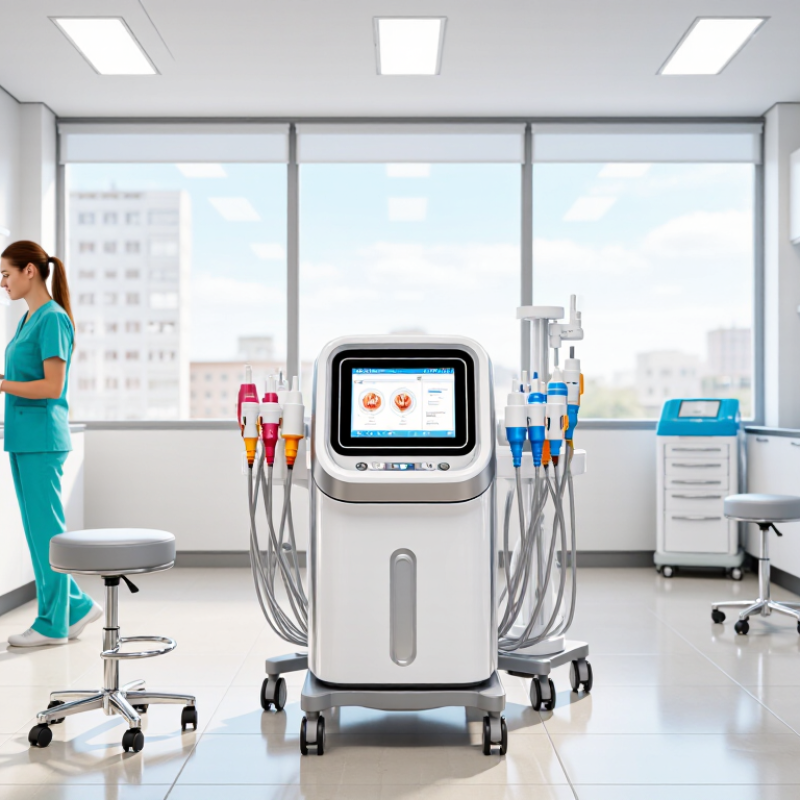
How to Choose Aesthetic Machines in 2026

Quantify Local Demand with ISAPS 2023’s 34.9 Million Global Procedures

Choosing aesthetic machines in 2026 should begin with local demand, not showroom excitement. ISAPS’s 2023 Global Survey recorded approximately 34.9 million aesthetic procedures worldwide. About 19.1 million were nonsurgical treatments, including injectables, skin procedures, and energy-based services. This split matters when estimating equipment utilization.

Translate global figures into a local demand model. Review competitor menus, consultation records, search trends, and seasonal booking patterns. Then compare them with ISAPS regional data, where procedure preferences vary considerably. The American Society of Plastic Surgeons reported more than 5.5 million minimally invasive cosmetic procedures in the United States during 2023. That figure suggests strong interest, but it does not guarantee demand in a smaller city. Geography changes everything.

A practical purchasing model should estimate monthly treatments, consumable costs, staff training, maintenance, and realistic payback time. Separate confirmed bookings from optimistic inquiries. A machine supporting several popular protocols may reduce idle time, but versatility can also increase training demands. That assumption can fail. I would test demand with limited campaigns or rental access before committing to major capital expenditure. Record treatment duration, conversion rates, repeat visits, and patient feedback. Reports provide direction; your own clinic data should make the final decision.

Match Treatments to Devices Using ASPS 2023’s 25.4 Million U.S. Procedures

How to Choose Aesthetic Machines in 2026

ASPS 2023 reported 25.4 million cosmetic and reconstructive procedures in the United States. This figure shows demand, but it does not tell you which machine to buy. Begin with your treatment menu. Fine lines may require resurfacing or tightening technology. Unwanted hair needs a device designed for follicle targeting. Pigment concerns require controlled energy and careful skin assessment.

Match each device to your patients, not only to popular search trends. Review treatment depth, energy delivery, cooling, adjustable settings, and expected recovery. A qualified clinician should assess skin tone, medical history, medications, and treatment goals before choosing a protocol. Ask for peer-reviewed evidence, training details, maintenance requirements, and realistic outcome data. A polished demonstration is not proof of consistent results.

Tips: Build a simple treatment-device matrix. List the target concern, suitable energy, contraindications, treatment time, and follow-up needs. Test the workflow with trained staff before purchasing. Also, question impressive statistics. Procedure volume may reflect many treatment types, while your clinic may serve a much narrower population. One device can appear versatile but still perform poorly for your patient mix. That is an easy mistake to make. Reassess outcomes through standardized photographs, documented settings, patient feedback, and adverse-event reviews. Adjust protocols when evidence or experience exposes a weakness.

How to Choose Aesthetic Machines in 2026 — Match Treatments to Devices Using ASPS 2023’s 25.4 Million U.S. Procedures
Priority Treatment Demand Area ASPS 2023 U.S. Procedure Data Best-Fit Device Category Primary Treatment Target Key Selection Criteria for 2026 Important Limitations and Safety Considerations
1 Botulinum toxin injections 9.48 million procedures No energy-based machine required; consider digital photography, consultation, and injection-support systems. Dynamic facial lines caused by muscle activity, including glabellar lines, forehead lines, and lateral canthal lines. Prioritize patient assessment, standardized photography, trained injectors, product storage, and emergency protocols rather than purchasing a laser platform. Device-based alternatives do not replicate the neuromodulatory effect. Treatment must be performed by appropriately licensed professionals using approved indications and techniques.
2 Soft-tissue fillers 5.50 million procedures No energy-based machine required; use imaging, photography, and clinical documentation systems. Volume restoration, facial contouring, lip enhancement, and correction of selected folds and depressions. Choose workflow and documentation tools that support informed consent, facial assessment, product traceability, and follow-up care. Ultrasound or other imaging may assist selected clinical evaluations but does not replace anatomical knowledge or injection expertise. Vascular-occlusion preparedness is essential.
3 Laser skin resurfacing Included in ASPS’s 25.4 million minimally invasive procedures Fractional ablative CO2 or erbium:YAG laser; fractional non-ablative laser for lower downtime. Photoaging, fine lines, uneven texture, selected acne scars, and dyschromia. Compare wavelength, fractional coverage, pulse control, cooling, spot size, treatment depth, downtime, and service requirements. Ablative systems generally create more thermal injury and downtime than non-ablative systems. Risk varies with skin type, settings, aftercare, and operator training.
4 Non-ablative facial rejuvenation Included in ASPS’s 25.4 million minimally invasive procedures Non-ablative fractional laser, intense pulsed light, or long-pulsed vascular/pigment laser. Sun-related pigmentation, superficial redness, mild texture changes, and early photoaging. Choose based on the dominant indication: broadband light for multiple superficial targets, or a specific laser wavelength for more selective treatment. Intense pulsed light is not a single wavelength and requires appropriate filters, cooling, skin assessment, and eye protection. Pigmentary complications are possible.
5 Laser hair removal Included in ASPS’s 25.4 million minimally invasive procedures Long-pulsed alexandrite, diode, or Nd:YAG laser; device choice should reflect skin type and hair characteristics. Long-term reduction of unwanted hair on the face and body. Evaluate wavelength options, pulse duration, spot size, cooling, repetition rate, treatment speed, and suitability across a broad range of skin tones. Results depend on hair color, thickness, growth cycle, hormonal factors, and skin type. Blonde, white, and gray hair respond poorly because they contain little melanin.
6 Pigmented-lesion and vascular-lesion treatment Included in ASPS’s 25.4 million minimally invasive procedures Q-switched or picosecond laser for selected pigment targets; pulsed-dye or Nd:YAG laser for selected vascular targets. Selected benign superficial pigmentation, lentigines, telangiectasia, and other clinically assessed vascular concerns. Choose a platform according to chromophore, wavelength, pulse duration, spot size, cooling, and the clinic’s patient skin-type profile. Suspicious, changing, or diagnostically uncertain lesions require medical evaluation before cosmetic treatment. Not every pigmented or vascular lesion is suitable for laser therapy.
7 Acne and acne-scar management Included in ASPS’s 25.4 million minimally invasive procedures Fractional resurfacing laser, radiofrequency microneedling, or selected light-based systems. Active acne support, post-inflammatory changes, atrophic acne scars, and uneven skin texture. For scars, compare adjustable depth, energy delivery, treatment uniformity, insulated versus non-insulated needles, and downtime. Active infection, uncontrolled inflammation, darker skin types, and aggressive settings may increase adverse-effect risk. Device choice should follow diagnosis and scar pattern.
8 Skin tightening and laxity improvement Included in ASPS’s 25.4 million minimally invasive procedures Radiofrequency, microfocused ultrasound, or other non-surgical tissue-heating systems. Mild to moderate skin laxity and collagen-remodeling goals. Compare treatment depth, temperature monitoring, energy control, applicator design, feedback systems, and the evidence for the intended anatomical area. Results are generally gradual and moderate rather than equivalent to surgery. Avoid excessive heating and carefully assess implanted electronic or metallic devices.
9 Body contouring and subcutaneous fat reduction Included in ASPS’s 25.4 million minimally invasive procedures Cryolipolysis, focused ultrasound, radiofrequency heating, or low-level light systems, depending on indication. Non-surgical reduction of localized subcutaneous fat in appropriately selected patients. Compare applicator fit, treatment area, temperature or energy monitoring, treatment time, consumables, and the strength of clinical evidence for each body area. These systems are not weight-loss treatments. Patient selection, anatomical assessment, contraindication screening, and realistic expectations are essential.
10 Chemical peel support and skin-preparation services Included in ASPS’s 25.4 million minimally invasive procedures No machine is inherently required; optional support includes cleansing systems, magnification, photography, and controlled cooling. Superficial dyschromia, rough texture, acne-related concerns, and selected signs of photoaging. Invest first in clinical protocols, patient screening, product handling, and aftercare rather than using a device to substitute for treatment planning. Peel depth, agent concentration, exposure time, skin type, and aftercare influence risk. Devices marketed as “peel replacements” should not be assumed to provide equivalent outcomes.
Data note: The American Society of Plastic Surgeons reported approximately 25.4 million minimally invasive cosmetic procedures in the United States in 2023. The botulinum toxin and soft-tissue filler figures shown above are rounded ASPS 2023 category figures. The remaining rows represent treatment-demand areas within the ASPS minimally invasive procedure universe; ASPS procedure statistics do not prescribe a specific device, wavelength, manufacturer, or purchasing decision. Device selection should be confirmed against current regulatory clearances, clinical evidence, operator training, patient skin type, contraindications, and local requirements.

Verify Safety Through FDA Clearance, IEC 60601, and ISO 14971 Standards

When choosing aesthetic machines in 2026, safety documents deserve more attention than glossy images. FDA clearance can confirm that a device has been reviewed for a specific intended use. It does not mean the machine is universally safe or suitable for every treatment. Check the exact model, cleared indication, operating limits, and required training. A mismatch between the clearance and your planned procedure should stop the purchase.

IEC 60601 addresses essential electrical and medical equipment safety. Look for current test reports, not only a certificate shown during a sales call. Review protection against electric shock, overheating, leakage, and electromagnetic interference. ISO 14971 focuses on medical device risk management. A reliable manufacturer should identify hazards, estimate risks, apply controls, and monitor problems after launch. Ask for evidence of corrective actions and updated risk reviews. Missing paperwork is a warning.

Tips: Request the full technical file, declaration of conformity, test dates, user manual, and maintenance schedule. Confirm that serial numbers match across documents. Ask who services the machine and how quickly parts arrive. Test the interface with gloves on. Small details matter. I have seen buyers focus on treatment speed and overlook cleaning access. That mistake can affect daily infection-control routines. No checklist is perfect, and standards do not replace trained operators, documented consent, or careful clinical judgment.

Compare Ownership Costs Against 2024 Medical Aesthetics Market Growth Data

In 2026, choosing an aesthetic machine requires more than comparing purchase prices. The 2024 medical aesthetics market showed strong growth, but reported rates differed across regions and treatment categories. That variation matters. A growing market does not guarantee fast returns for every clinic.

Calculate the full ownership cost before reviewing technical features. Include equipment price, financing, installation, staff training, maintenance, consumables, insurance, and room usage. A machine costing $80,000 may require another $12,000 annually for service and supplies. If one treatment produces $180 in gross revenue, calculate how many paid sessions cover fixed costs. Keep cancellations and seasonal demand in the model.

Look closely at your local patient demand. A busy clinic may need shorter treatment times and simple staff workflows. A smaller practice might value low maintenance more than advanced settings. Ask for service records, warranty terms, training limits, and realistic downtime estimates. Speak with experienced operators, not only sales representatives. Their feedback can reveal uncomfortable details.

I would also challenge optimistic growth assumptions. The 2024 market expanded, yet some clinics still struggled with underused devices. That happened when purchasing decisions followed trends rather than appointment data. Review twelve months of treatment requests, repeat visits, and average spending. Then test conservative, expected, and weak-demand scenarios. The imperfect model is often more useful than a confident forecast.

Validate ROI Through Utilization, Training, Maintenance, and Service Metrics

How to Choose Aesthetic Machines in 2026

Aesthetic machine ROI begins with utilization, not purchase price. Track treatment hours, booked sessions, cancellations, and idle time each month. A machine operating below 35% capacity may drain cash, even with strong treatment margins. Use verified appointment records, not optimistic sales forecasts. Calculate revenue per treatment, consumable costs, staff time, and room occupancy. Small gaps matter.

Training should be measured like any operating expense. Record onboarding hours, supervised cases, competency checks, and refresher sessions. Skilled staff reduce errors and improve treatment consistency. However, training is not a one-time event. New staff may need support months later. That cost is easy to overlook. It should still appear in the ROI model.

Maintenance and service metrics reveal the machine’s real business value. Track preventive maintenance dates, downtime hours, repair frequency, and average response time. Ask how quickly technical support can diagnose problems remotely or on site. Keep service records with invoices and engineer reports. A spreadsheet can still lie. One clinic may report high utilization while losing appointments during repeated faults. Review the numbers quarterly, compare them with actual bookings, and question assumptions that look too convenient.