


Best Aesthetic Medical Clinic Equipment in 2026
Choosing the best equipment for an aesthetic medical clinic requires more than following market excitement. It demands clinical evidence, operator training, patient safety, and measurable outcomes. The ISAPS Global Survey 2023 recorded more than 34.9 million surgical and nonsurgical aesthetic procedures worldwide. Nonsurgical treatments represented over 19 million procedures, showing strong demand for injectables, energy devices, and skin technologies. Yet popularity does not prove clinical suitability.
Market growth also creates pressure. Grand View Research estimated the global aesthetic medicine market at approximately USD 18.3 billion in 2023, with continued expansion expected through 2030. This momentum can encourage rushed purchasing decisions. A cheaper laser may become expensive after maintenance, consumables, downtime, and training are included. A reliable platform should offer documented indications, adjustable energy controls, clear safety protocols, and accessible technical support. Aesthetic practitioners must also review regulatory clearance in their operating region.
Jean Carruthers, MD, a pioneer in aesthetic medicine, has said, “We don’t treat faces; we treat people.” That principle should guide every equipment decision. The best device is not always the newest one. It is the device that fits patient needs, staff competence, room ventilation, infection-control procedures, and follow-up capacity. In practice, this may mean choosing one versatile platform instead of several underused systems. That choice may feel less impressive. It can be more responsible. This guide examines the best aesthetic medical clinic equipment for 2026, while acknowledging that no technology removes the need for clinical judgment, honest consultation, and continuous review of evidence.
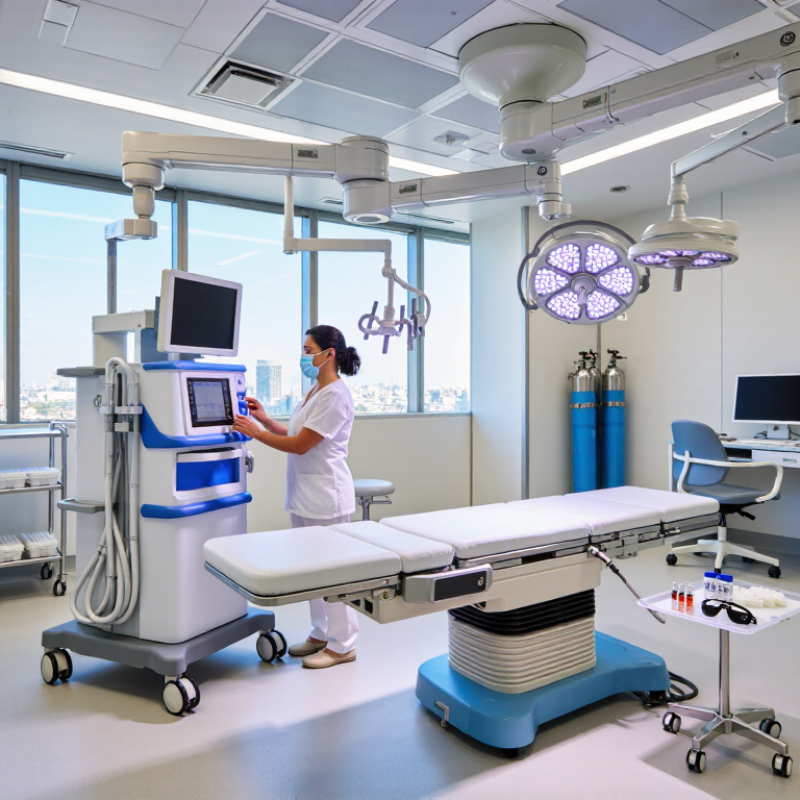
Table of Contents
[Hide]
Defining the Best Aesthetic Medical Clinic Equipment in 2026
Defining the Best Aesthetic Medical Clinic Equipment in 2026
“Best” does not simply mean newest or most feature-rich. It means equipment that suits the clinic’s services, staff training, room layout, and patient needs. A device may look impressive in a demonstration but prove awkward in a narrow treatment room. Check setup time, cleaning requirements, adjustable settings, and how clearly the system displays treatment parameters. Small details matter. A readable screen and accessible emergency controls can make daily workflows more dependable.
Safety and support deserve equal attention. Review the manufacturer’s instructions, service schedule, staff training needs, and available technical support before purchasing. Ask how routine checks are documented and what happens when a device needs repair. Reliable records help clinics spot maintenance gaps, though paperwork alone cannot replace careful practice. Equipment should be used only by appropriately trained professionals, with patient assessment and informed consent guiding treatment decisions. The right choice may be less exciting than a newer model. That is worth admitting. A practical evaluation can include a supervised demonstration, realistic room setup, and time for staff to raise concerns before a purchase.
| Equipment Category | Primary Clinical Uses | Core Technology | Typical Treatment Parameters | Typical Downtime | Common Treatment Frequency | Clinical Strengths | Important Limitations | Overall Clinic Value |
|---|---|---|---|---|---|---|---|---|
| Intense Pulsed Light (IPL) | Photodamage, freckles, diffuse redness, selected vascular lesions, and some unwanted hair reduction | Broad-spectrum filtered flashlamp light | Commonly uses approximately 500–1,200 nm filters; fluence and pulse duration are adjusted to skin type and indication | Usually none to 3 days of redness or mild swelling | Typically 3–5 sessions at 3–6 week intervals | Versatile platform with several cosmetic indications and relatively short recovery | Not a true laser; results depend strongly on skin type, cooling, filters, and operator settings. Higher melanin levels require careful protocols | High versatility |
| Long-Pulsed 755 nm Laser | Hair reduction and selected benign pigmented lesions in appropriate skin types | Melanin-selective laser energy | Wavelength: 755 nm; pulse duration and fluence vary by hair thickness, treatment area, and skin type | Usually 1–3 days of perifollicular redness or swelling | Usually 6–8 sessions, commonly spaced 4–8 weeks apart | Efficient for darker, coarser hair when sufficient pigment contrast exists | Less suitable for very dark or recently tanned skin; limited effect on white, gray, blond, or red hair | High for hair services |
| Long-Pulsed 1064 nm Laser | Hair reduction, selected vascular targets, and treatment of some deeper lesions | Near-infrared laser with relatively deeper penetration | Wavelength: 1064 nm; longer pulse durations are selected for deeper or darker targets | Usually minimal; temporary redness or perifollicular edema may occur | Commonly 4–8 sessions at 4–8 week intervals | Often preferred for hair reduction in darker skin types when appropriate cooling and conservative settings are used | May require more sessions for fine or lightly pigmented hair; eye protection and thermal control are essential | High safety flexibility |
| Fractional Ablative CO₂ Laser | Atrophic acne scars, textural irregularity, wrinkles, and selected resurfacing indications | 10,600 nm ablative fractional laser | Microthermal treatment zones with adjustable density, energy, and pulse duration | Approximately 5–14 days, depending on treatment intensity and skin response | Often 1–3 sessions separated by approximately 8–12 weeks | Strong resurfacing capability and substantial collagen remodeling potential | Greater risk of prolonged erythema, post-inflammatory hyperpigmentation, infection, and delayed healing; strict aftercare is required | High clinical impact |
| Fractional Erbium Laser | Fine lines, superficial scars, uneven texture, and lighter resurfacing treatments | Approximately 2,940 nm water-absorbed ablative laser | Fractional or fully ablative delivery with adjustable depth and density | Approximately 3–7 days for many fractional protocols | Usually 1–4 sessions at 6–12 week intervals | More superficial and precise ablation with generally shorter recovery than aggressive CO₂ resurfacing | May provide less improvement for deep scars or marked laxity than stronger ablative protocols | High precision |
| Non-Ablative Fractional Laser | Melasma support, photodamage, fine lines, enlarged pores, and acne-scar texture | Fractional non-ablative wavelengths, commonly around 1,540–1,565 nm or 1,927 nm | Creates controlled dermal heating without removing the epidermal surface | Usually none to 3 days of redness, swelling, or mild bronzing | Commonly 3–5 sessions at 4–8 week intervals | Useful balance between clinical improvement and limited downtime | Results are usually more gradual and less dramatic than with ablative resurfacing; pigmentary disorders require careful selection | High patient acceptability |
| Radiofrequency Microneedling | Acne scars, skin laxity, fine lines, enlarged pores, and selected body-texture concerns | Insulated or non-insulated needles deliver bipolar or monopolar radiofrequency into the dermis | Needle depth commonly ranges from approximately 0.5–4.0 mm; energy and pulse duration are device- and area-dependent | Usually 1–4 days of redness, swelling, or pinpoint crusting | Typically 3–4 sessions at 4–8 week intervals | Depth-controlled dermal heating with limited epidermal exposure and broad treatment flexibility | Technique-sensitive; risks include burns, prolonged inflammation, infection, and rare fat loss if applied inappropriately | High multifunction value |
| Focused Ultrasound Skin Tightening | Non-surgical lifting and tightening of selected facial and neck areas | Focused ultrasound creates thermal coagulation points at controlled tissue depths | Common focal depths include approximately 1.5, 3.0, and 4.5 mm, depending on the treatment area and system | Usually none; tenderness, swelling, or temporary nerve sensitivity may occur | Often one treatment, with reassessment after 3–6 months | Non-invasive approach with delayed collagen remodeling and minimal surface injury | Results are generally moderate and depend on baseline laxity; discomfort and rare nerve-related effects are possible | High for low downtime |
| Cryolipolysis | Non-invasive reduction of localized subcutaneous fat in suitable body areas | Controlled cooling induces adipocyte injury without surgical removal | Applicator temperature and exposure time are system-specific; treatment commonly lasts approximately 35–75 minutes per cycle | Usually none, but numbness, tenderness, swelling, or bruising may persist for days to weeks | Often 1–2 sessions per area, generally separated by at least 8 weeks | Non-surgical body contouring with no incisions or general anesthesia | Not a weight-loss treatment; patient selection is critical, and rare paradoxical adipose hyperplasia is a recognized risk | High for body contouring |
| Multipolar Radiofrequency Body Contouring | Temporary skin tightening, cellulite appearance, and localized contouring support | Controlled radiofrequency heating of superficial and subcutaneous tissues | Surface temperature is commonly monitored and maintained within a tolerable therapeutic range; settings vary by applicator | Usually none; temporary warmth or erythema may occur | Commonly 4–8 sessions at weekly or biweekly intervals | Comfortable, repeatable, and suitable for maintenance-oriented treatment plans | Changes are generally modest and temporary; thermal monitoring and correct movement of the applicator are essential | High treatment comfort |
| LED Photobiomodulation | Adjunctive support for acne, post-procedure erythema, wound recovery, and general skin maintenance | Low-intensity red, near-infrared, and/or blue light | Common wavelengths include approximately blue 415 nm, red 630–660 nm, and near-infrared 810–850 nm | None | Often 2–3 sessions weekly for 4–8 weeks, followed by maintenance treatments | Non-invasive, comfortable, and easy to combine with other procedures | Effects are usually gradual and supportive rather than equivalent to resurfacing or surgical procedures; eye protection may be required | High as an add-on |
| Medical-Grade Hydradermabrasion System | Superficial cleansing, exfoliation, hydration, and temporary improvement in skin brightness | Fluid vortex, vacuum-assisted cleansing, and topical infusion | Uses adjustable vacuum, exfoliation, and solution flow; settings depend on skin sensitivity and treatment goals | Usually none to several hours of mild redness | Commonly every 4–6 weeks or before events | Comfortable, accessible, and suitable for a broad range of routine facial services | Primarily superficial; does not replace treatment for deep scars, significant laxity, or advanced photodamage | High service accessibility |
Clinical note: The specifications shown are representative clinical ranges rather than universal settings. Actual treatment parameters, contraindications, expected results, and recovery time vary according to the device configuration, treatment area, skin type, medical history, and practitioner training. All procedures should be performed by appropriately qualified professionals under applicable local regulations.
Related Posts
-
What Is Aesthetic Medical Equipment?
-
2026 Top Aesthetic Medical Clinic Trends for Global Buyers?
-
What Are the Top Medical Aesthetic Equipment in 2026?
-

Top 10 Aesthetic Business Ideas for Global Buyers
-
2026 Top Aesthetic Medical Devices for Global Buyers?
-
How to Find China Top Aesthetic Equipment Suppliers?