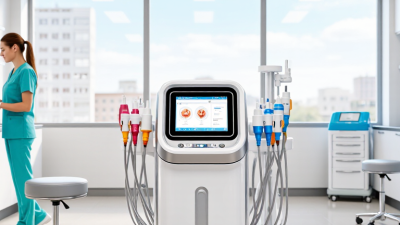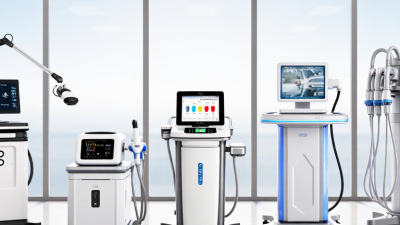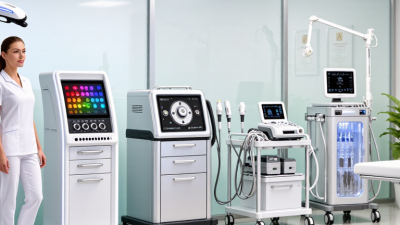

The global demand for professional aesthetic equipment is expanding beyond luxury clinics. It now supports dermatology practices, medical spas, hospitals, and specialist treatment centers.
Fortune Business Insights estimated the global aesthetic devices market at USD 15.93 billion in 2023. Its report projects the market to reach USD 30.09 billion by 2030. Grand View Research also identifies strong growth in non-invasive aesthetic treatments through 2030. These figures suggest opportunity, but they do not guarantee equal product quality.
This guide examines top professional aesthetic equipment suppliers worldwide through practical criteria. These include clinical evidence, device durability, operator training, service coverage, and regulatory documentation. A reliable supplier should provide traceable maintenance records and clear safety instructions. The details matter. A missing software update or delayed handpiece can disrupt an entire treatment day.
Dr. R. Rox Anderson, a leading laser medicine researcher, is widely associated with the principle: “If you can’t make it better, don’t make it worse.” That sentence remains relevant when comparing energy-based platforms, body-contouring systems, and skin-treatment devices. The most expensive machine is not automatically the best choice. Some marketing claims also deserve closer questioning.
Readers should verify approvals in their own markets, rather than relying on broad international claims. Independent clinical studies, transparent warranties, and responsive technical support offer stronger evidence than impressive brochures. This overview is designed to support careful evaluation, not rushed purchasing decisions.
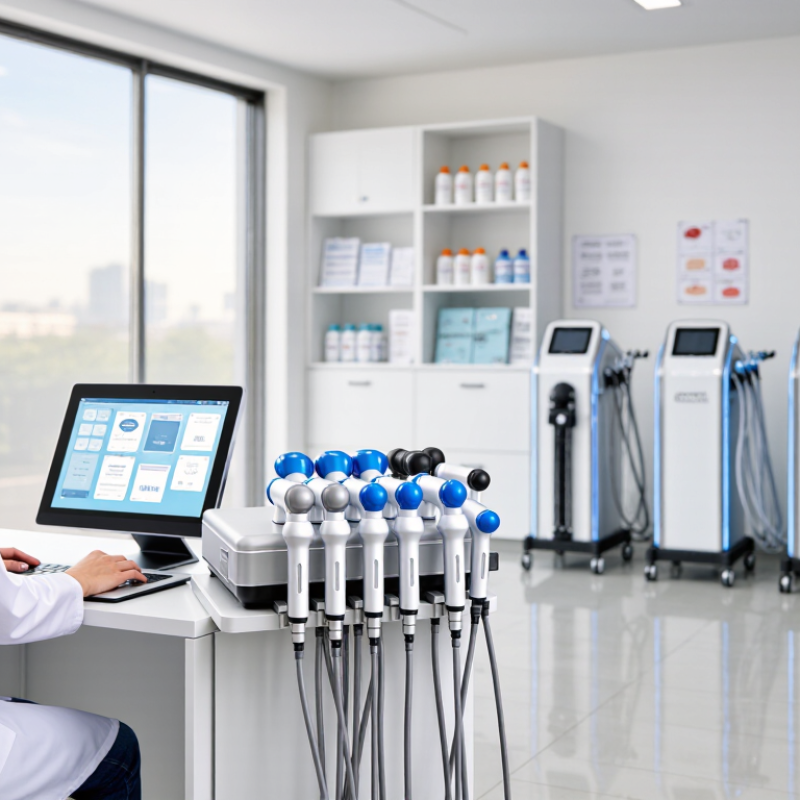
The global aesthetic devices market was valued at USD 17.1 billion in 2023, according to Grand View Research. It is projected to expand at an 11.6% CAGR through 2030. This growth reflects rising demand for non-invasive treatments, shorter recovery times, and more precise clinical workflows. For professional aesthetic equipment suppliers, market scale matters. It does not replace technical proof.
Clinical buyers now examine energy output, treatment consistency, cooling control, service response, and operator training. The 2023 ISAPS Global Survey recorded more than 34 million surgical and non-surgical aesthetic procedures worldwide. Non-surgical treatments represented a large share of reported activity. That figure shows strong demand, but it also exposes a weakness: procedure volume alone cannot prove device quality.
Experienced suppliers should provide traceable specifications, safety documentation, maintenance schedules, and realistic performance data. Independent testing is valuable. So is field feedback from qualified practitioners. A device may look advanced on a showroom floor yet create workflow problems during a busy clinic day. That part is easy to miss. Buyers should also compare total ownership costs, including consumables, calibration, training, and downtime. Market forecasts can be persuasive, but forecasts are not guarantees. Regional regulations, reimbursement limits, and uneven clinical adoption may change purchasing decisions before 2030. A careful supplier explains these uncertainties instead of promising effortless growth.
Professional aesthetic equipment suppliers increasingly support clinics with five core technologies: lasers, radiofrequency, ultrasound, intense pulsed light, and cryolipolysis. Each system requires a different treatment strategy. Lasers deliver focused energy for selected skin concerns, while RF uses controlled heat to support tissue tightening. Ultrasound penetrates deeper layers with adjustable acoustic energy. IPL uses broad-spectrum light and needs careful skin assessment. Cryolipolysis targets localized fat through controlled cooling.
Reliable suppliers provide more than attractive specifications. They should explain fluence, pulse duration, cooling methods, frequency, applicator design, and treatment depth in practical terms. Clear training matters. So does calibration. A clinic should receive maintenance records, user guidance, contraindication information, and responsive technical support. Evidence should come from credible studies and real clinical experience, not only sales language. A clean specification sheet is not enough.
Safety depends on the operator and the device. Patient screening, informed consent, protective equipment, and documented treatment settings reduce avoidable risks. Even experienced teams can misjudge skin response, especially with darker skin types or combined procedures. That deserves honest discussion. Suppliers should also help clinics follow local medical-device requirements and advertising rules. Results vary, and no technology fits every patient. Trial protocols, follow-up photography, and careful recordkeeping often reveal weaknesses that confident demonstrations hide.
Top professional aesthetic equipment suppliers should prove compliance, not merely display certificates. The ISO Survey of Management System Standards 2022 recorded more than 37,000 ISO 13485 certificates across 107 countries. This scale shows the standard’s global relevance. It does not prove every supplier performs well.
ISO 13485 should cover design controls, risk management, supplier qualification, production records, and corrective actions. Ask for the certificate scope and issuing body. Check whether it covers the exact equipment category. FDA requirements also depend on intended use and device classification. FDA’s 2023 CDRH reporting recorded more than two million medical device adverse-event reports. Traceable complaint handling matters. A supplier should provide serial-number records, calibration evidence, and documented service training. Small details matter.
CE marking is a conformity route under European rules, not a universal quality award. For higher-risk equipment, verify the notified body, technical documentation, clinical evaluation, and post-market surveillance arrangements. A declaration alone may be insufficient. The European Medical Device Regulation also expects stronger evidence and ongoing vigilance. In practical audits, supplier files can still contain gaps, even with valid certificates. That is uncomfortable, but useful. Request recent audit findings, corrective-action closure dates, and translated instructions before purchasing. A reliable supplier answers precisely, keeps records accessible, and explains limitations without exaggeration.
A standards-based comparison framework for evaluating professional aesthetic equipment suppliers and medical-device compliance documentation.
| Compliance dimension | Applicable market or authority | What compliant suppliers should provide | What the standard or document demonstrates | Important verification note |
|---|---|---|---|---|
| FDA establishment registration and device listing | United States | FDA establishment registration details, device listing information, U.S. agent information where applicable, and the applicable product classification. | Shows that the relevant establishment and device information has been submitted to the U.S. Food and Drug Administration as required for the product category. | Registration or listing is not the same as FDA approval or clearance. Confirm the exact device, manufacturer, and intended use. |
| 510(k) premarket clearance | United States; applicable to eligible moderate-risk devices | A valid 510(k) number, clearance decision, product identification, and intended-use information. | Demonstrates substantial equivalence to a legally marketed predicate device for the cleared indications. | Clearance applies to the specific cleared indications and configuration; it does not automatically cover every treatment claim or attachment. |
| De Novo classification or PMA approval | United States; selected novel or high-risk devices | The relevant De Novo order or PMA approval reference, together with labeling and approved indications where applicable. | Provides a regulatory pathway for certain novel devices or evidence of safety and effectiveness for high-risk devices. | The regulatory pathway depends on device classification, intended use, technological characteristics, and risk level. |
| CE marking under EU MDR 2017/745 | European Union and markets recognizing EU medical-device conformity assessment | EU Declaration of Conformity, device classification, technical documentation summary, labeling, and notified-body information when required. | Indicates that the manufacturer declares conformity with applicable EU requirements and has completed the required conformity-assessment route. | CE marking is not a universal quality award. Verify the applicable regulation, certificate scope, issuing notified body, and product model. |
| Notified-body involvement | European Union; generally relevant for higher-risk device classes and certain special categories | Notified-body name and identification number, certificate type, certificate validity, and precise product or quality-system scope. | Shows that an authorized conformity-assessment organization has performed the activities required for the applicable route. | Some Class I devices may follow self-declaration routes, while Class IIa, Class IIb, and Class III devices generally require notified-body assessment under applicable rules. |
| ISO 13485:2016 quality-management system | International; widely requested for medical-device manufacturing and supply chains | A current ISO 13485:2016 certificate issued by an accredited certification body, including sites, activities, and product scope. | Demonstrates that the organization operates a quality-management system designed for applicable medical-device regulatory and customer requirements. | ISO 13485 certification does not by itself prove that a specific device is FDA-cleared, CE-marked, clinically effective, or suitable for a particular treatment. |
| Risk-management documentation | International and market-specific regulatory submissions | Risk-management file, hazard analysis, risk controls, residual-risk evaluation, and links to verification and validation evidence. | Shows that foreseeable hazards, including electrical, thermal, optical, mechanical, and software risks where relevant, have been systematically assessed. | Request documentation appropriate to the device technology and intended use; proprietary information may be redacted but should remain traceable. |
| Electrical safety and electromagnetic compatibility | Most regulated markets | Applicable test reports, declarations, ratings, installation requirements, and evidence of electromagnetic-compatibility evaluation. | Supports safe operation under specified electrical conditions and acceptable immunity and emissions performance. | Check that reports identify the same model, accessories, software version, power configuration, and intended operating environment. |
| Laser and intense-pulsed-light safety | Markets regulating optical-radiation products; requirements vary by device and jurisdiction | Wavelength or spectrum data, output limits, classification information where applicable, protective measures, warnings, and operator instructions. | Supports safe control of optical radiation and identifies precautions for operators, patients, and bystanders. | Verify treatment parameters, protective eyewear requirements, interlocks, skin-contact controls, and local professional-use restrictions. |
| Clinical evaluation and performance evidence | Relevant to medical-device claims and regulated aesthetic indications | Clinical evaluation or investigation summary, performance data, contraindications, adverse-event information, and substantiation for promotional claims. | Provides evidence that the device performs as intended and that claimed benefits and risks have been evaluated appropriately. | Marketing statements should not exceed the approved, cleared, or technically substantiated intended use. |
| Post-market surveillance and vigilance | Markets with medical-device reporting and corrective-action obligations | Complaint-handling process, incident-reporting procedure, field-safety-corrective-action process, and maintenance of service records. | Indicates that safety and performance are monitored after commercial release and that corrective actions can be managed. | Ask how the supplier handles recalls, software updates, adverse events, spare parts, and technical support in the destination market. |
| Supplier qualification and traceability | International procurement and distributor evaluation | Unique device identification or serial-number controls where applicable, batch or lot records, authorized-distributor evidence, warranty terms, and training documentation. | Supports product authenticity, service continuity, complaint investigation, and traceability throughout the supply chain. | Confirm that the certificate holder, legal manufacturer, production site, distributor, and supplied model are consistent across all documents. |
A professional aesthetic equipment supplier should provide more than polished images and fast quotations. Clinical evidence deserves careful review. Ask for peer-reviewed studies, treatment protocols, and outcome data from similar clinics. A small sample is not useless, but it needs honest limits. Check device settings, patient selection, follow-up periods, and reported adverse events. Vague claims are a warning. In my experience, suppliers who explain uncertainty often seem more trustworthy than those promising perfect results.
Safety begins before delivery. Request electrical certifications, risk assessments, contraindication lists, and cleaning instructions. Confirm that accessories are traceable and replaceable. A live demonstration should show emergency shutdown, skin-contact checks, and safe parameter changes. Training must fit real workflows, not just a short sales presentation. Effective instruction includes supervised practice, assessment records, and refresher sessions after staff turnover. One uncomfortable question matters: who helps when an operator feels unsure?
After-sales service becomes visible when a handpiece fails on a busy Tuesday. Reliable suppliers state response times, repair procedures, warranty exclusions, and spare-part availability in writing. Remote support can help, but complex faults may require qualified technicians onsite. Ask for service records and references from clinics with similar workloads. Documentation should remain accessible months later. No evaluation is flawless. Assumptions still need review after installation, because maintenance quality and patient responses may differ from the demonstration. A cheaper offer can become expensive through downtime, retraining, or preventable complications.
Supplier Evaluation: Clinical Evidence, Safety, Training, and After-Sales Service
This evaluation framework assigns 100 total points across four practical criteria. Clinical evidence and safety receive the highest weighting because professional aesthetic devices should be supported by documented outcomes, risk management, regulatory compliance, and electrical or equipment safety controls. Training and after-sales service measure the supplier’s ability to support safe operation throughout the device lifecycle.
Reference framework aligned with commonly used medical-device principles including ISO 13485 quality management, ISO 14971 risk management, IEC 60601 equipment safety, and clinical evaluation practices.
ISAPS reported 34.9 million surgical and nonsurgical aesthetic procedures worldwide in 2023. That figure shows demand, but it also raises a practical question: can equipment suppliers support safe growth? Professional suppliers should provide traceable specifications, user training, calibration guidance, maintenance schedules, and responsive technical support. A device should not be judged by screen size or marketing language. Its clinical purpose matters more.
In practice, reliability appears in small details. Handpieces should be easy to disinfect. Treatment parameters should be clear. Service records should show serial numbers, inspections, and replaced parts. Suppliers with strong technical knowledge also explain patient selection, contraindications, and realistic outcomes without promising perfection. They should distinguish between evidence, internal testing, and sales claims. That distinction protects clinicians and patients.
The 34.9 million-procedure figure is impressive, yet volume can hide uneven standards. Some clinics may purchase advanced systems before building adequate training or follow-up processes. That is a weakness worth admitting. Better procurement includes demonstrations, staff competency checks, informed consent materials, and adverse-event reporting plans. Independent regulatory review remains essential, because supplier confidence is not the same as clinical proof. A dependable partner supports careful decisions, even when that slows the sale.